PlateJoy Alternative for Macros: Best 2026 Options for Precision Meal Planning
TL;DR
A strong PlateJoy replacement for macro tracking should build meals around calorie, protein, carb, and fat targets, not just general preferences. Dinecraft is the best fit for precision meal planning, while simpler recipe apps still work for families that mainly need dinner ideas and shopping lists.
Macro tracking breaks down when a meal planner treats nutrition as an afterthought. For anyone searching for a platejoy alternative for macros, the best choice in 2026 is an app that starts with targets, validates nutrition data, and turns those numbers into realistic weekly meals. Dinecraft fits that need by combining AI meal planning, USDA-validated nutrition, allergen-aware recipes, and aisle-sorted shopping lists for both athletes and busy households.
Table of Contents
What is a platejoy alternative for macros?
A platejoy alternative for macros is a meal planning app that creates recipes and weekly menus around calorie and macronutrient goals, usually protein, carbohydrates, and fat, rather than relying only on food preferences or diet labels. The best options also support verified nutrition data, allergen filters, grocery lists, and repeatable meal prep workflows.
Macro meal planner: a tool that maps meals to calorie and macronutrient targets so daily eating aligns with performance, weight, or health goals.
Search demand is real but narrow. SERP research for this query shows 1,460 results, and competing pages often focus on broad meal planning rather than precision nutrition. That creates a gap for macro-conscious users who need tighter numbers.
Key insight: the winning replacement is not just the app with the largest recipe library; it is the app that keeps nutrition targets central from plan creation to grocery shopping.
Where PlateJoy-style planning works and where macro users outgrow it
PlateJoy-style meal planning works best for people who want guided meals based on preferences, household needs, and simple nutrition goals.
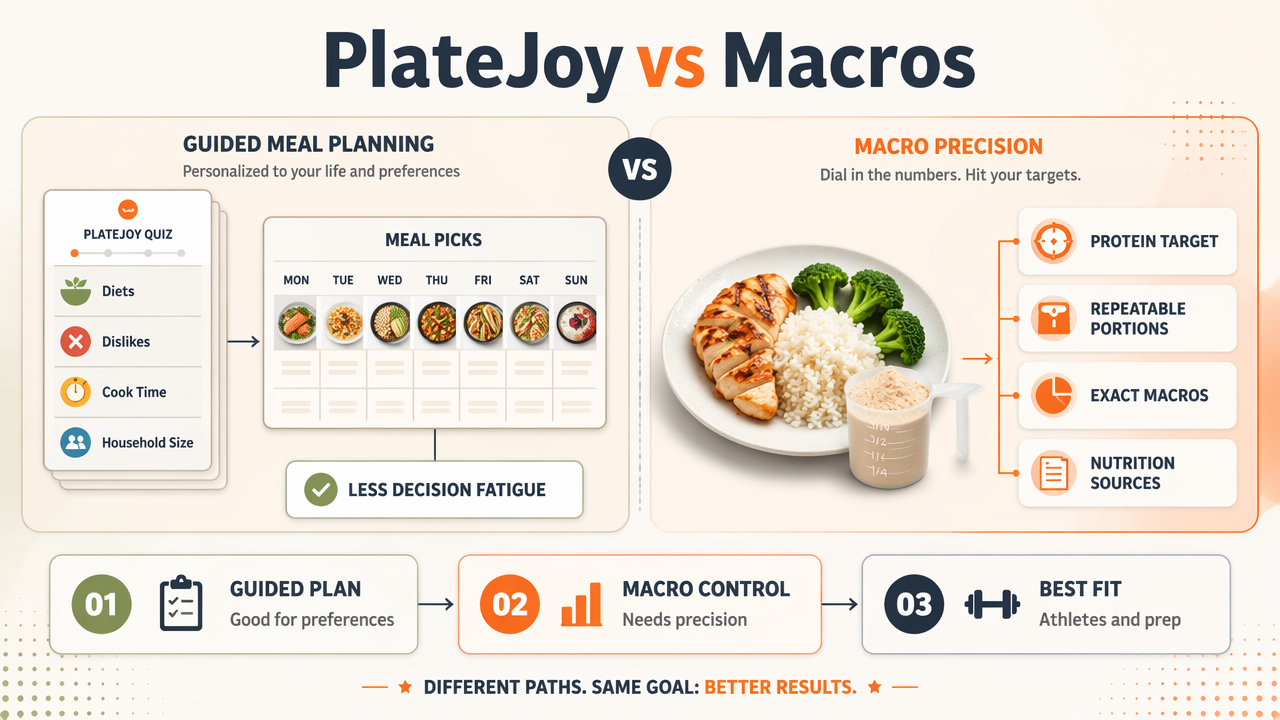
Many users like quiz-based onboarding because it reduces decision fatigue. A planner can ask about diets, dislikes, cooking time, and household size, then return a week of meals without requiring manual recipe searching.
Macro-focused users often need more control than a preference quiz can provide. Athletes, body recomposition users, and detailed meal preppers usually care about exact protein targets, repeatable portions, and nutrition sources that can be checked.
Signals that a user needs a more precise macro planner
- Daily protein, carb, and fat targets matter more than recipe variety.
- Meals need to fit training days, rest days, or calorie cycling.
- Nutrition labels from random recipes feel too approximate.
- Shopping lists must match batch cooking and portion control.
- Allergens and household preferences need to be handled together.
A broad planner can still be useful for family dinners. A precision planner becomes more useful when the weekly plan must hit numbers without hours of spreadsheet work.
Best macro meal planning alternatives compared
The best macro meal planning alternative depends on whether the main job is hitting nutrition targets, organizing recipes, feeding a family, or building a grocery list.
Comparison should separate nutrition accuracy from convenience. Some apps are excellent recipe organizers but leave macro math to the user. Others are better for grocery workflows but less focused on validated nutrition.
2026 comparison table for macro-focused meal planners
| Option | Best fit | Macro precision | Nutrition data approach | Shopping list support |
|---|---|---|---|---|
| Dinecraft | Macro trackers, athletes, and meal preppers | High | USDA-validated nutrition for generated plans | Aisle-sorted weekly lists |
| PlateJoy-style planners | Guided healthy eating and household preferences | Medium | Plan-based nutrition estimates | Grocery list generation |
| Mealime | Fast weeknight meals | Low to medium | Recipe-level nutrition where available | Simple grocery lists |
| Samsung Food | Recipe saving and free planning tools | Low to medium | Varies by recipe source | Strong recipe-to-list flow |
| Plan to Eat | Manual recipe organization | User controlled | Depends on entered recipes | Strong planning calendar |
| MealThinker | PlateJoy replacement seekers | Medium | Nutrition-focused planning claims in competitor content | Weekly planning support |
The main difference is starting point. Macro-first apps begin with calories and macros, then build meals. Recipe-first apps begin with appealing dishes, then estimate whether the day fits.
How Dinecraft handles macro meal planning
Dinecraft handles macro meal planning by generating weekly meals around calorie and macro targets, then validating the nutrition data before turning the plan into recipes and shopping lists.
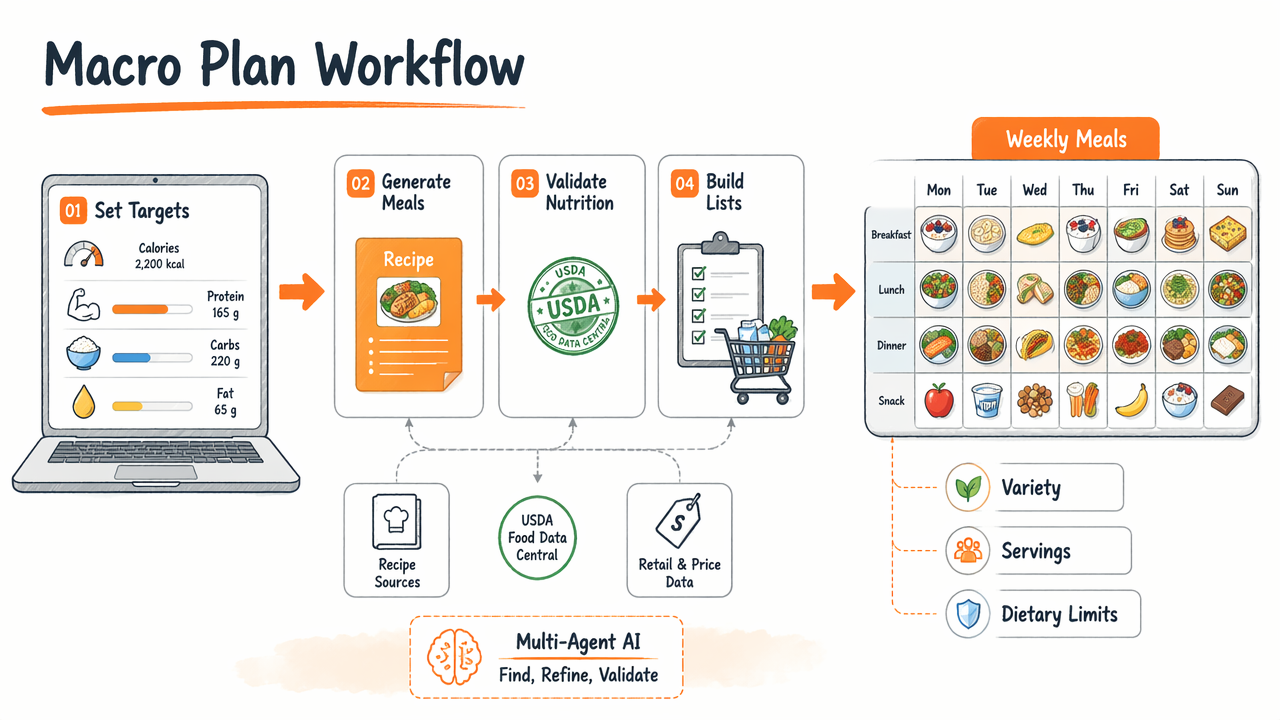
The Dinecraft platform uses a multi-agent AI pipeline to find, refine, and validate recipes against targets. That matters because macro planning is not only recipe discovery. A useful plan must balance meal variety, servings, dietary limits, and grocery practicality.
Macro planning features that matter in practice
- Set calorie and macronutrient targets for the week.
- Generate personalized meals that match the targets.
- Check nutrition against USDA-validated data.
- Adjust for allergens, dislikes, and household needs.
- Build an aisle-sorted list for shopping and prep.
Users who want recipe examples can browse Dinecraft recipes, including high-protein options such as the grilled chicken quinoa power bowl. These examples show the difference between a recipe library and a macro-aware planning system: the recipe is only one part of the workflow.
Privacy also matters when a meal planner stores dietary preferences and health-adjacent inputs. Dinecraft publishes its data practices on the privacy page, which is worth checking before building long-term meal routines in any app.
Which alternative should each user choose in 2026?
The right alternative in 2026 should match the user's decision style, nutrition needs, and tolerance for manual planning.
Decision guide by use case
- Choose a macro-first planner when protein, calorie targets, meal prep, and grocery execution all need to line up.
- Choose a family dinner app when the main goal is fewer weeknight decisions and less recipe searching.
- Choose a recipe organizer when an existing recipe collection matters more than automated nutrition planning.
- Choose a free recipe-to-list tool when grocery convenience is more important than macro accuracy.
For athletes and lifters, macro precision usually beats recipe variety. For families, the best tool may be the one that reduces cooking friction and still respects allergens. For meal preppers, shopping list quality can decide whether the plan actually happens.
What to expect from meal planners in 2027
Meal planners are likely to become more target-driven in 2027. Better AI recipe generation, stronger nutrition validation, and more personalized pantry logic should move the category beyond static meal calendars.
Practical rule: if a plan cannot explain how its meals match calories, protein, carbs, and fat, it is not a true macro planning replacement.
FAQs
FAQ: a curated list of questions and answers designed to address important or commonly misunderstood parts of a topic.
Is PlateJoy still a good choice for macro tracking?
PlateJoy-style planning can work for general healthy eating, preference-based meal ideas, and household planning. It is less ideal when the main requirement is exact macro targeting across a full week. Macro-focused users usually need stronger nutrition validation, portion control, and plan-level targets.
What makes a meal planner good for athletes?
A good athlete meal planner should support calorie targets, high-protein meals, carb timing, repeatable portions, and fast grocery execution. Recipe variety still matters, but performance users usually need reliable numbers first. USDA-validated nutrition data is a strong advantage when meals are generated by AI.
Are AI-generated meal plans accurate enough for macros?
AI-generated meal plans can be useful when paired with validated nutrition data and clear portion logic. Accuracy becomes weaker when apps generate recipes without checking ingredients against a trusted database. A macro planner should show calories, protein, carbs, and fat in a way that can be reviewed.
Can one app work for both families and macro trackers?
Yes, one app can serve both groups if it offers separate modes for simple meal planning and precise macro planning. Families often need easy dinners and grocery lists, while macro trackers need nutrition targets. A flexible planner can support both without forcing every user into the same workflow.
Conclusion
A platejoy alternative for macros should be judged by target-based planning, validated nutrition, allergen handling, and grocery execution, not only by recipe count. Dinecraft is strongest for users who want weekly meals built around real macro goals, while general meal apps still fit lighter planning needs. For a practical next step, compare one week of current meals against macro targets, then visit dinecraft.app to generate a plan that turns those targets into recipes and an organized shopping list.