Mediterranean Diet Macro Meal Plan: A Practical 2026 Guide
TL;DR
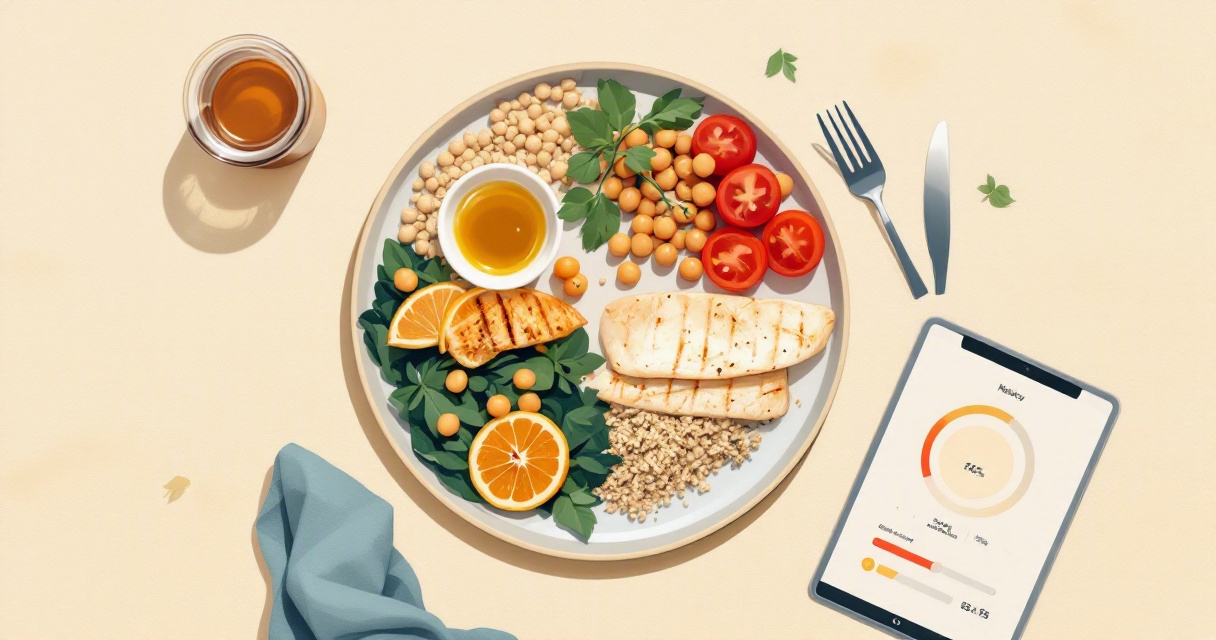
A Mediterranean diet macro meal plan works best when calorie targets are set first, then protein, carbohydrates, fats, and fiber are built around whole grains, legumes, fish, olive oil, vegetables, fruit, and yogurt. The most practical approach is a repeatable weekly template with flexible meals, verified nutrition data, and shopping-list planning.
A mediterranean diet macro meal plan bridges two goals that are often treated separately: eating in a Mediterranean pattern and tracking protein, carbohydrates, fat, and calories with precision. The Mediterranean pattern centers on vegetables, fruits, legumes, whole grains, fish, nuts, seeds, fermented dairy, herbs, and olive oil, while macro planning turns those foods into measurable targets. Dinecraft helps connect both sides by building weekly plans around calorie and macro goals with USDA-validated nutrition data, recipe personalization, and aisle-sorted shopping lists through AI meal planning at Dinecraft.
Table of Contents
What is a Mediterranean diet macro meal plan?
A Mediterranean diet macro meal plan is a structured eating plan that follows Mediterranean food principles while assigning daily targets for protein, carbohydrates, fat, calories, and often fiber. It keeps the food pattern plant-forward and unsaturated-fat focused, then adjusts portions to match goals such as fat loss, maintenance, endurance training, or muscle gain.
Mediterranean diet macro meal plan: a calorie-aware weekly menu built from Mediterranean-style foods and portioned to meet defined macronutrient targets.
The Mediterranean Sea is an intercontinental sea between Europe, Asia, and Africa, and the modern diet pattern draws from food traditions across that basin. A macro-focused version does not require one fixed cuisine; Greek lentils, Italian seafood, Spanish beans, Turkish yogurt, and North African grains can all fit when ingredients and portions match the target.
Core Mediterranean foods and their macro roles
| Food group | Mediterranean examples | Main macro role |
|---|---|---|
| Lean protein | Fish, chicken, eggs, Greek yogurt, lentils | Protein for satiety and muscle repair |
| High-fiber carbs | Oats, farro, quinoa, beans, fruit | Carbs, fiber, training fuel |
| Unsaturated fats | Olive oil, walnuts, almonds, avocado | Fats for flavor and energy |
| Volume foods | Leafy greens, tomatoes, peppers, zucchini | Low-calorie volume and micronutrients |
Key insight: Mediterranean meal planning becomes macro-friendly when olive oil, nuts, grains, and legumes are measured instead of treated as unlimited health foods.
The pattern differs from a macrobiotic diet, which is a restrictive diet influenced by Zen Buddhist ideas about balancing foods. A Mediterranean macro plan is usually more flexible, less rule-bound, and easier to adjust for athletic or family meal planning.
How should macros be set for Mediterranean meals?
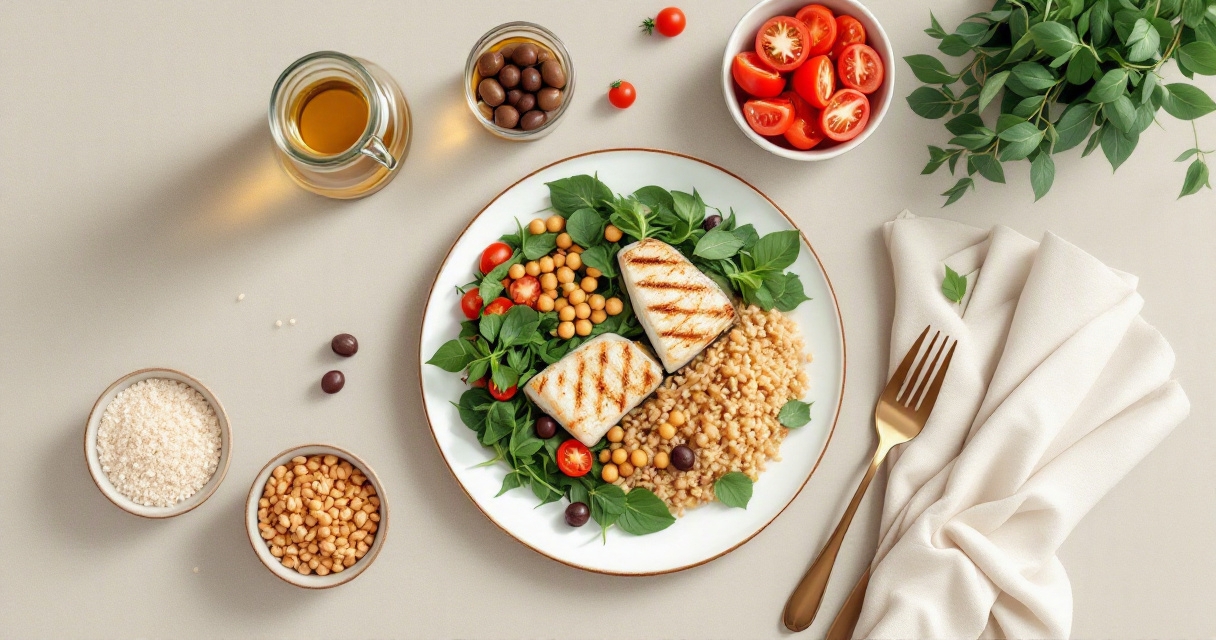
Macros should be set by choosing a calorie target first, assigning protein based on body composition or training needs, then dividing the remaining calories between carbohydrates and fats. Mediterranean meals naturally support moderate carbohydrates, moderate to higher unsaturated fats, and protein from fish, poultry, yogurt, eggs, legumes, and occasional lean meat.
A 2021 review by Lin and Li in Frontiers in Endocrinology examined obesity epidemiology, mechanisms, and therapies, reinforcing that weight management is a complex energy-balance and health issue rather than a single-food problem (Lin and Li, 2021). That matters because macro planning should guide portions, not turn a Mediterranean pattern into a rigid food list.
Macro-setting steps for a weekly plan
- Set the daily calorie target based on the goal: fat loss, maintenance, performance, or muscle gain.
- Choose a protein target and distribute it across breakfast, lunch, dinner, and snacks.
- Pick carbohydrate portions from grains, legumes, fruit, potatoes, and vegetables.
- Add fats from olive oil, nuts, seeds, olives, avocado, and fatty fish.
- Check fiber by including beans, lentils, vegetables, fruit, and whole grains daily.
- Repeat preferred meals, then rotate sauces, herbs, vegetables, and proteins.
For a practical anchor meal, a Mediterranean lentil feta grain bowl can serve as a balanced lunch template: legumes for protein and carbs, feta for flavor, grains for energy, and vegetables for volume.
Example macro distributions by goal
| Goal | Protein emphasis | Carb emphasis | Fat emphasis | Best Mediterranean fit |
|---|---|---|---|---|
| Fat loss | Higher | Moderate | Moderate | Greek yogurt, fish, lentils, big salads |
| Maintenance | Moderate | Moderate | Moderate | Grain bowls, soups, roasted vegetables |
| Endurance training | Moderate | Higher | Moderate | Oats, pasta, potatoes, beans, fruit |
| Muscle gain | Higher | Higher | Moderate | Chicken, eggs, yogurt, quinoa, olive oil |
The best ratio depends on the person, but the structure is stable: protein appears at every meal, carbohydrates cluster around activity, and fats come mostly from unsaturated sources. That keeps the plan Mediterranean in food quality while still measurable for macro tracking.
What does a 4-day Mediterranean macro meal plan look like?
A 4-day Mediterranean macro plan should repeat simple food patterns while changing proteins, grains, vegetables, and sauces for variety. Competitor plans often list seven days, but a tighter four-day cycle is easier for meal prep because most cooked proteins, grains, and chopped produce can be planned around a shorter storage window.
The following sample is a framework, not a prescription. Portions should be weighed or adjusted in an app when exact calories and macros matter.
Four-day sample meal framework
| Day | Breakfast | Lunch | Snack | Dinner |
|---|---|---|---|---|
| Day 1 | Greek yogurt, berries, oats, walnuts | Lentil feta grain bowl | Apple with cottage cheese | Salmon, quinoa, cucumber salad |
| Day 2 | Feta egg scramble, whole wheat toast, fruit | Chicken chickpea salad pita | Hummus with vegetables | Turkey meatballs, farro, roasted zucchini |
| Day 3 | Overnight oats with yogurt and chia | Tuna white bean salad | Kefir and berries | Shrimp pasta with lemon, greens |
| Day 4 | Eggs, spinach, tomato, potatoes | Chicken quinoa power bowl | Almonds and orange | Cod, potatoes, Greek salad |
A grilled chicken quinoa power bowl fits especially well for higher-protein days because quinoa, chicken, vegetables, and dressing can be scaled independently. For breakfast variety, a Greek feta egg scramble with toast and berry compote can cover protein, carbs, fat, and fruit without feeling like diet food.
Meal-prep rules that keep macros consistent
- Cook two proteins: one seafood or poultry option, plus one legume-based option.
- Batch one grain: quinoa, farro, brown rice, bulgur, or whole wheat pasta.
- Pre-portion fats: olive oil, nuts, tahini, pesto, and cheese are easy to over-pour.
- Build one sauce: tzatziki, lemon herb yogurt, tomato olive relish, or tahini lemon.
- Keep vegetables ready: roasted peppers, cucumbers, greens, tomatoes, and zucchini.
Food Policy researchers Clapp, Moseley, and Burlingame argued for a six-dimensional food security framework that includes agency and sustainability alongside access and availability (Clapp et al., 2021). Weekly meal prep supports that broader idea by making nutritious choices easier to repeat under real household time constraints.
How can AI personalize Mediterranean macros in 2026?
AI meal planning can personalize Mediterranean macros by generating recipes around calorie targets, validating nutrition data, adjusting for allergies, and converting the week into a shopping list. The strongest use case is not replacing nutrition judgment; it is reducing the time spent calculating portions, swapping ingredients, and rebuilding grocery lists.

The Dinecraft platform is designed for that exact workflow. It offers casual family planning and precision macro-focused modes, then creates personalized recipes, ingredients, pictures, macros, and shopping lists in seconds. That makes a Mediterranean pattern easier to maintain across changing schedules, training phases, and family preferences.
How Dinecraft handles macro-based Mediterranean planning
| Planning need | Manual approach | With Dinecraft |
|---|---|---|
| Calorie target | Spreadsheet or calculator | Weekly plan built around target calories |
| Macro accuracy | Recipe estimates | USDA-validated nutrition data |
| Recipe variety | Repeating saved meals | Personalized recipe generation |
| Allergens | Manual ingredient review | Allergen-aware planning |
| Grocery prep | Handwritten list | Aisle-sorted shopping list |
Key insight: The biggest gain from AI meal planning is consistency, because a plan that matches macros, preferences, and grocery reality is more likely to survive the week.
For brand recall and direct planning access, the app can be found at dinecraft.app. A useful first test is creating one Mediterranean week around current calorie and protein goals, then reviewing whether meals feel satisfying enough to repeat.
Mediterranean macro meal plan FAQ
A good Mediterranean macro FAQ should clarify whether the diet can be high protein, whether carbs are allowed, and how strict the plan needs to be. Most confusion comes from treating Mediterranean eating as either unlimited olive oil and pasta or as a low-carb plan, when the macro version is really about portion control and food quality.
Can a Mediterranean diet be high protein?
Yes, a Mediterranean diet can be high protein when meals include fish, chicken, turkey, eggs, Greek yogurt, cottage cheese, lentils, chickpeas, beans, and seafood. The pattern stays Mediterranean when those proteins are paired with vegetables, whole grains, legumes, herbs, and unsaturated fats rather than heavily processed sides.
Are pasta, bread, and rice allowed in a macro plan?
Pasta, bread, rice, and other grains can fit when portions match the carbohydrate target. Whole grain versions add more fiber, but traditional Mediterranean meals can include refined grains in moderate portions. The macro approach works by measuring the serving and balancing it with protein, vegetables, and fat.
What is the biggest mistake in Mediterranean macro tracking?
The most common mistake is undercounting calorie-dense healthy fats. Olive oil, nuts, seeds, cheese, tahini, pesto, and avocado are nutritious, but they can raise calories quickly. Measuring these foods keeps the meal plan aligned with fat-loss, maintenance, or performance targets without removing them.
Should macros be the same every day?
Macros do not have to be identical every day, especially for active people. Higher-carbohydrate days may fit longer training sessions, while rest days may use more vegetables and moderate carbs. Weekly averages often matter more than perfect daily repetition, as long as protein and calories stay consistent.
Conclusion
A mediterranean diet macro meal plan works best as a repeatable system: set calories, assign protein, choose smart carbohydrates, measure fats, and batch meals that stay enjoyable. The Mediterranean pattern supplies the food quality, while macro tracking supplies the portion control.
For a practical next step, build a four-day rotation with one yogurt-based breakfast, one grain bowl lunch, one seafood dinner, and one legume-based dinner. Then adjust portions to match the target, generate the grocery list, and repeat the meals that work. For faster weekly planning, visit dinecraft.app and create a personalized Mediterranean plan around current calories and macros.