Meal Planning for Picky Families: A Practical 2026 System

Meal planning for picky families gets easier when you stop trying to cook one perfect meal and start building flexible meals from shared ingredients. Picky eating, often called selective eating, means a person is highly selective about foods they will and won't eat. For 2026 families balancing sports, macros, allergies, budgets, and busy nights, the winning plan is simple: keep familiar foods, add controlled choice, and let tools like Dinecraft handle the recipe math.
What is meal planning for picky families?
Meal planning for picky families is a weekly system that chooses meals around shared ingredients, safe foods, nutrition goals, and optional add-ons so each person can eat without the cook making separate dinners. The goal is not to "fix" picky eating overnight; it is to reduce dinner stress while keeping meals balanced.
Selective eating: A pattern of strongly preferring some foods and rejecting others, often because of taste, texture, smell, appearance, routine, or past food experiences.
Research on eating behavior supports a careful, non-punitive approach. A 2023 rapid review in the Journal of Eating Disorders examined risk factors connected to eating disorders, which is a reminder that family food rules should avoid shame and pressure Barakat, McLean, and Bryant, 2023. A 2021 study in Appetite looked at child eating behaviors, parental feeding practices, and shopping motivations during lockdown in France, showing how family routines and shopping patterns are closely linked Philippe, Chabanet, and Issanchou, 2021.
Key insight: A picky-family meal plan should lower friction first, then improve variety in small steps.
How do you build a weekly plan that picky eaters will actually use?
Build a weekly plan by choosing 3 to 5 base meals, listing each person's safe foods, adding one low-pressure new food, and repeating winners. A stable rotation gives picky eaters predictability while giving parents enough variety to meet nutrition, budget, and prep goals.
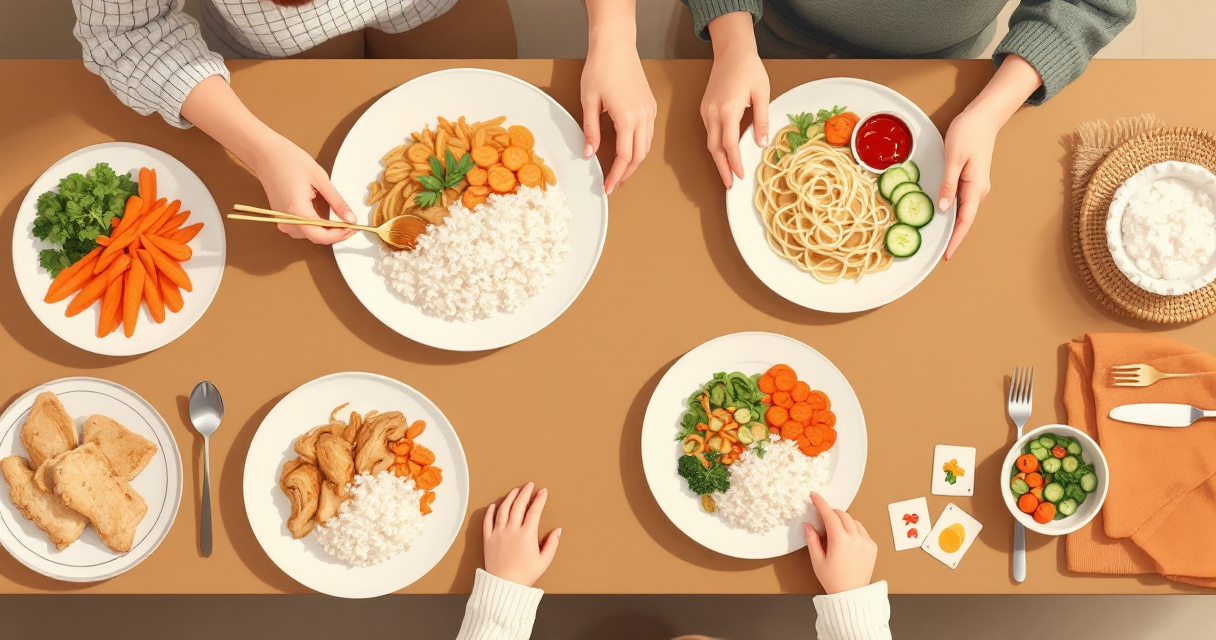
Use the base meal plus swaps framework
The best structure is a base meal everyone recognizes, plus optional proteins, sauces, toppings, and sides. This avoids short-order cooking because the same core ingredients become several plates.
- Pick a familiar base: pasta, tacos, rice bowls, burgers, breakfast-for-dinner, soup, or sheet-pan chicken.
- Choose one shared protein: chicken, turkey, eggs, beans, tofu, beef, fish, or lentils.
- Offer 2 safe sides: fruit, bread, rice, potatoes, yogurt, cucumbers, or carrots.
- Add one "learning food" in a tiny serving with no pressure.
- Save the accepted version as next week's default.
For example, a chicken rice bowl can become plain chicken with rice for one child, chicken with salsa and beans for another, and a macro-focused bowl for an athlete. If you need a template, the grilled chicken quinoa power bowl shows how one protein can support a balanced plate without forcing every topping onto every eater.
Base meal swaps for common picky-eater patterns
Use swaps to protect the meal's structure while respecting texture and flavor preferences.
| Picky pattern | Base meal idea | Easy swap | Nutrition upgrade |
|---|---|---|---|
| Avoids mixed foods | Taco night | Serve fillings separated | Add beans or avocado on the side |
| Rejects sauces | Pasta night | Sauce on the side | Blend vegetables into sauce for willing eaters |
| Only wants beige foods | Chicken strips | Add roasted potatoes | Offer fruit or yogurt alongside |
| Dislikes vegetables | Burger bowls | Lettuce optional | Try cucumber, corn, or sweet potato |
| Needs high protein | Rice bowls | Double protein portion | Use Greek yogurt sauce or beans |
Keep the table somewhere visible. When you plan dinner, you are not asking, "What will everyone eat?" You are asking, "Which base meal can flex tonight?"
How can families improve nutrition without starting dinner battles?
Families can improve nutrition by pairing accepted foods with small, repeated exposures to new foods, not by removing safe foods. A realistic plan keeps at least one accepted item on every plate, then uses portions, dips, sides, and toppings to add protein, fiber, color, and healthy fats.
Rotate familiar meals with one planned improvement
A good weekly rhythm might include two comfort meals, two build-your-own meals, one leftover night, and one new recipe. The upgrade should be small enough that dinner still feels familiar.
- Pizza night: Add side salad for adults, fruit for kids, and grilled chicken for higher protein.
- Pasta night: Use the same noodles, then offer meatballs, lentils, or grated cheese.
- Taco night: Keep shells and cheese, then add beans, corn, avocado, or shredded lettuce.
- Breakfast night: Pair pancakes or toast with eggs, yogurt, or berries.
A systems review in the International Journal of Behavioral Nutrition and Physical Activity mapped how food environments connect with dietary intake in low-income groups, which reinforces that access, cost, shopping patterns, and household routines affect what people eat Sawyer, van Lenthe, and Kamphuis, 2021. Planning needs to fit real kitchens, not ideal kitchens.
Use neutral language at the table
Pressure often backfires. Try neutral phrases that describe food without turning it into a test.
- "You don't have to eat it, but it stays on the plate."
- "This is crunchy like a cracker."
- "You can dip it, smell it, lick it, or leave it."
- "Tell me if you want it plain or with sauce."
Avoid making dessert the prize for vegetables. That teaches the child that vegetables are the obstacle and sweets are the reward.
How should you handle shopping lists, allergies, and macro goals?
Handle shopping, allergies, and macros by planning from shared ingredients first, then filtering recipes by household constraints. The safest system separates non-negotiables, such as allergens, from preferences, such as sauce, spice, texture, and toppings.
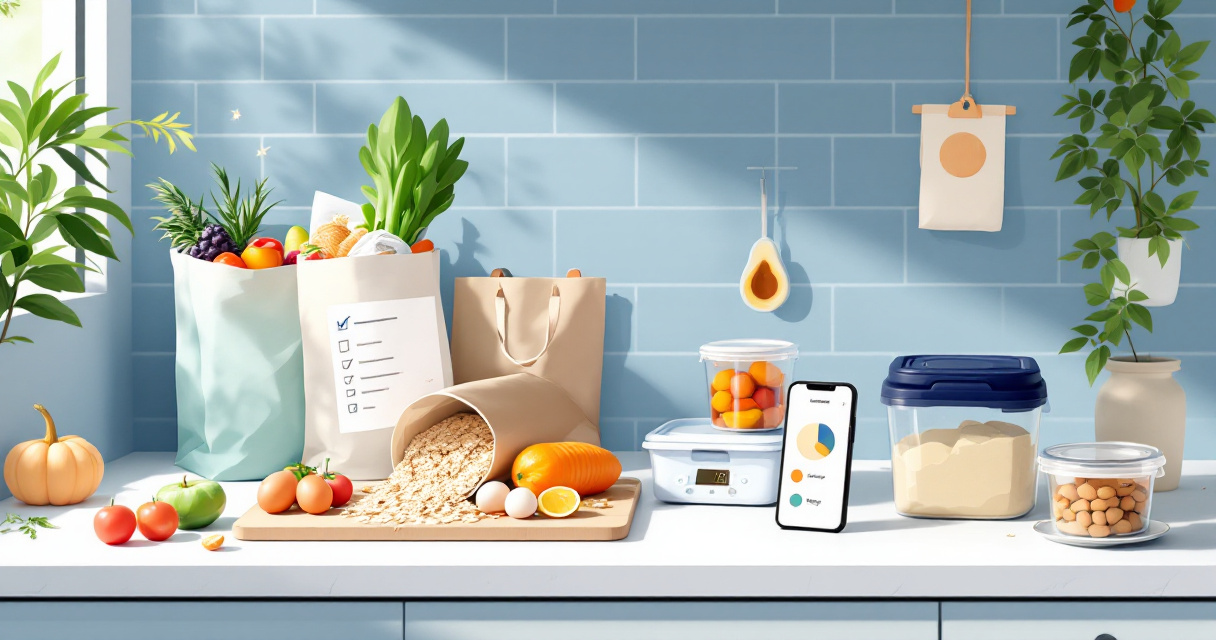
Create one aisle-sorted list from flexible meals
A family-friendly list should group ingredients by store section so you are not scanning recipes in the aisle. Start with repeat staples, then add only the special ingredients needed for this week.
Weekly staple categories:
- Proteins: chicken, eggs, turkey, beans, tofu, yogurt
- Carbs: rice, pasta, tortillas, potatoes, oats, bread
- Produce: fruit, cucumbers, carrots, lettuce, frozen vegetables
- Flavor builders: cheese, salsa, hummus, mild sauces, herbs
- Backup foods: soup, freezer meals, smoothie ingredients
If your family likes build-your-own meals, browse Dinecraft recipes for ideas that can be deconstructed into plain and fully loaded versions.
Separate allergies from preferences
Allergies and medical restrictions are hard rules. Preferences are planning signals. Do not treat them the same way.
| Constraint type | Example | Planning response |
|---|---|---|
| Allergy | Peanut, dairy, shellfish | Exclude completely and check labels |
| Medical need | Diabetes, celiac disease | Plan with clinical guidance when needed |
| Macro target | High protein, calorie deficit | Adjust portions and ingredient ratios |
| Preference | No sauce, no spice, no mixed foods | Serve components separately |
| Sensory issue | Crunchy only, smooth only | Match texture before changing flavor |
The Dinecraft platform is built for households that need both casual family planning and precise macro tracking. Its allergen-aware planning, USDA-validated nutrition data, and aisle-sorted shopping lists help families personalize meals without rebuilding the week from scratch.
How can AI personalize picky-family meal plans in 2026?
AI can personalize picky-family meal plans by matching recipes to safe foods, allergies, calorie targets, macro goals, cooking time, and shopping needs. The best use is not replacing parental judgment; it is generating flexible options faster than a parent can manually compare ingredients, portions, and nutrition.
How Dinecraft handles this
With Dinecraft, families can create weekly plans in a simple family mode or a precision mode for macro tracking. That matters when one household includes a picky child, a parent in a calorie deficit, and an athlete who needs higher protein.
The app uses a multi-agent recipe process to find, refine, and validate meals against targets. It can generate personalized recipes, ingredient lists, pictures, and macros in seconds. For a picky household, that means taco bowls, pasta, or chicken dinners can stay familiar while portions and toppings change by person.
In 2026, the best AI meal planner is not the one with the most recipes. It is the one that turns one family dinner into several acceptable plates without losing nutrition accuracy.
For more complex flavor preferences, a recipe like ginger soy honey glazed pan-seared chicken breasts with white rice and roasted vegetables can be served with sauce on the side, plain rice, and optional vegetables. Visit dinecraft.app when you want the plan built around your own household rules.
FAQ: Meal planning for picky families
These answers cover the practical questions parents ask most when planning weekly dinners around selective eating, limited time, nutrition goals, and family preferences.
How many dinners should I plan each week?
Plan 4 or 5 dinners, not 7. Leave room for leftovers, schedule changes, takeout, or a low-effort pantry meal. Picky families usually do better with a shorter plan that repeats accepted meals than a perfect calendar that collapses by Wednesday.
Should I cook separate meals for a picky eater?
Avoid separate meals as the default, but include at least one safe food at each dinner. A better compromise is one shared base meal with separated components. For example, taco night can include plain tortillas and cheese, seasoned meat, beans, vegetables, salsa, and toppings.
What if my child refuses the new food every time?
Keep exposure tiny and low-pressure. A pea-sized taste, a smell, or simply having the food on the plate can count as progress for some children. If refusal is extreme, affects growth, or causes major anxiety, ask a pediatrician or feeding specialist for guidance.
Can macro tracking work for family dinners?
Yes, if portions are adjustable. The meal can stay the same while protein, carbs, and fats change by person. A parent might add extra vegetables, an athlete might double protein, and a child might keep the plain version. More on dinecraft.app can help families build those variations faster.
Conclusion
Meal planning for picky families works when you plan for flexibility before you shop. Choose base meals, keep safe foods, separate allergies from preferences, add one small nutrition upgrade, and repeat what works. If you want less spreadsheet work, use Dinecraft to generate a weekly plan with validated nutrition, allergen-aware recipes, and an aisle-sorted list you can take straight to the store.