Meal Planning for Couples With Different Macros
TL;DR
Couples with different macro targets should cook shared base meals, then adjust portions, fats, starches, and protein add-ons per plate. The simplest system is one menu, one grocery list, and two serving profiles, preferably using validated nutrition data instead of guesswork.
Two people can eat the same dinner and still hit different protein, carb, fat, and calorie targets. Meal planning for couples with different macros works best when the household plans shared recipes, then customizes each plate with measured portions and modular add-ons. The Dinecraft platform is built for that exact tension: family-style planning with macro-focused precision, USDA-validated nutrition data, and aisle-sorted shopping lists.
Table of Contents
What is meal planning for couples with different macros?
Meal planning for couples with different macros is the practice of building one shared weekly menu while assigning different portion sizes, protein targets, carbohydrate servings, and fat add-ons to each person. The goal is household efficiency without forcing both partners into the same calorie budget or training goal.
Macros: protein, carbohydrates, and fat are the main calorie-providing nutrients tracked in macro-focused eating.
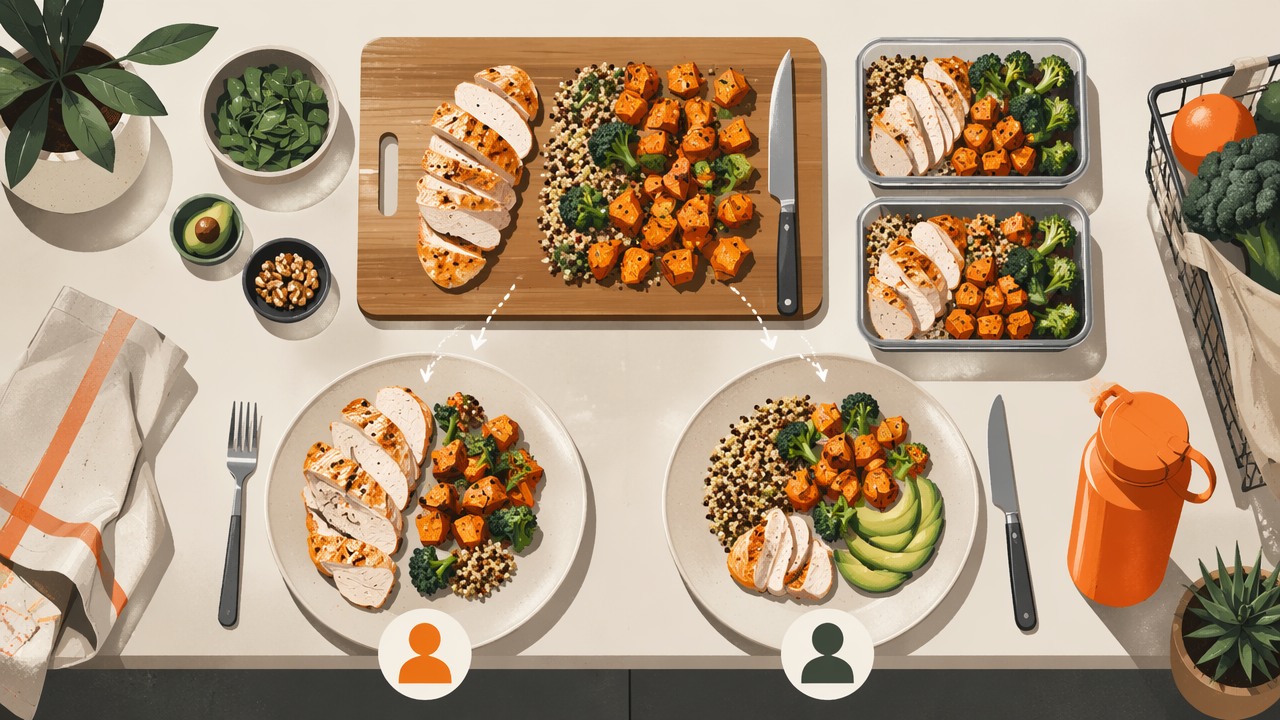
Shared-base meal: one recipe foundation, such as chicken, rice, and vegetables, that can be portioned differently for two people.
Portion profile: a repeatable serving pattern for one person, such as higher protein, lower carb, or higher calorie.
A meal, broadly, is a scheduled eating occasion involving food, which matches the practical challenge here: two people may share the same occasion but need different nutrition outcomes. Cohabiting partners often share kitchens, budgets, and food routines, so the best plan respects both household logistics and individual targets.
Key insight: the meal does not need to change for each partner; the plate architecture needs to change.
How can one dinner fit two macro targets?
One dinner can fit two macro targets by separating the recipe into a shared base, measured anchors, and adjustable add-ons. Protein, vegetables, and sauce can stay mostly consistent, while starches, oils, nuts, cheese, and extra lean protein shift each plate toward the right macro split.
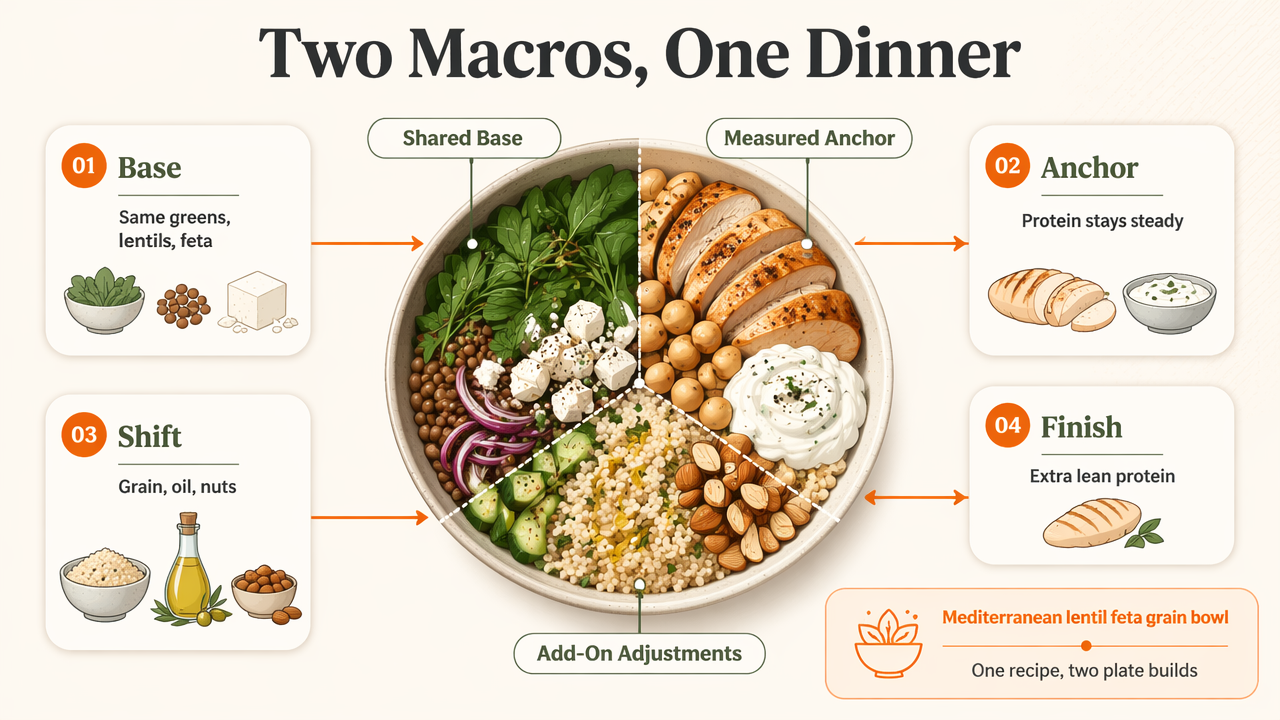
A strong couple-friendly dinner starts with a base both partners enjoy. For example, a grain bowl can use the same greens, lentils, feta, herbs, and dressing, then vary grain quantity and protein add-ons. A recipe such as a Mediterranean lentil feta grain bowl fits this model because the components are easy to weigh and split.
Shared-base meal framework
| Meal component | Shared by both partners | Easy macro adjustment |
|---|---|---|
| Lean protein | Chicken, fish, tofu, eggs, beans | Add 2 to 4 oz extra protein to one plate |
| Carb base | Rice, quinoa, pasta, potatoes, tortillas | Scale by cooked weight or measured cups |
| Vegetables | Broccoli, greens, peppers, cucumber | Usually increase freely unless tracking very strictly |
| Fat source | Olive oil, avocado, nuts, cheese, sauce | Add separately after cooking |
| Flavor system | Spice blend, salsa, herbs, citrus | Keep identical for consistency |
Research on plant compounds continues to support variety in whole-food diets. A 2023 review in Molecules examined major phytochemicals and their health-related properties, reinforcing the value of colorful vegetables, legumes, herbs, and fruits in meal patterns Kumar, Nirmal, and Kumar, 2023.
A practical rule keeps planning simple: cook shared items in bulk, then add calorie-dense ingredients after plating. Oil mixed into a skillet affects both plates; oil drizzled onto one bowl affects only one profile.
How should portions and add-ons be scaled?
Portions should be scaled by assigning each partner a default serving profile before cooking, then weighing only the ingredients that materially change macros. Protein, starches, oils, and calorie-dense toppings deserve measurement; herbs, vinegar, lettuce, and low-calorie vegetables usually need less attention.
Couples often fail when every meal becomes a custom recipe. A better method uses repeatable add-on rules. The higher-calorie partner might receive extra rice and olive oil. The higher-protein partner might receive extra chicken breast or Greek yogurt sauce. The lower-fat partner might keep the same meal but skip cheese or nuts.
Portion scaling rules by goal
| Goal difference | Keep the same | Adjust for one partner |
|---|---|---|
| One partner cutting calories | Protein, vegetables, seasoning | Reduce starch and added fat |
| One partner gaining muscle | Main recipe, sauce flavor | Add lean protein and carb serving |
| One partner higher fat | Protein, vegetables, carb base | Add avocado, oil, nuts, or cheese |
| One partner lower carb | Protein, vegetables, fat source | Swap part of rice or pasta for vegetables |
| One partner training hard | Dinner structure | Add pre-portioned carb side |
Simple scaling process
- Pick one shared recipe for dinner.
- Log or calculate the full cooked batch.
- Divide the batch into two base servings.
- Add measured extras for each partner.
- Save the portion profiles for future weeks.
A high-protein bowl, such as a grilled chicken quinoa power bowl, shows how this works. One plate can carry more quinoa for training fuel, while the other can keep quinoa moderate and add extra chicken.
Precision should focus on the foods that move the numbers most: protein portions, cooked grains, oils, sauces, cheese, nuts, and desserts.
How can couples prep one grocery list without losing precision?
Couples can prep one grocery list by planning shared ingredients first, then listing macro-specific add-ons as separate line items. This protects grocery efficiency while allowing each partner to keep a distinct nutrition target across breakfasts, lunches, dinners, and snacks.
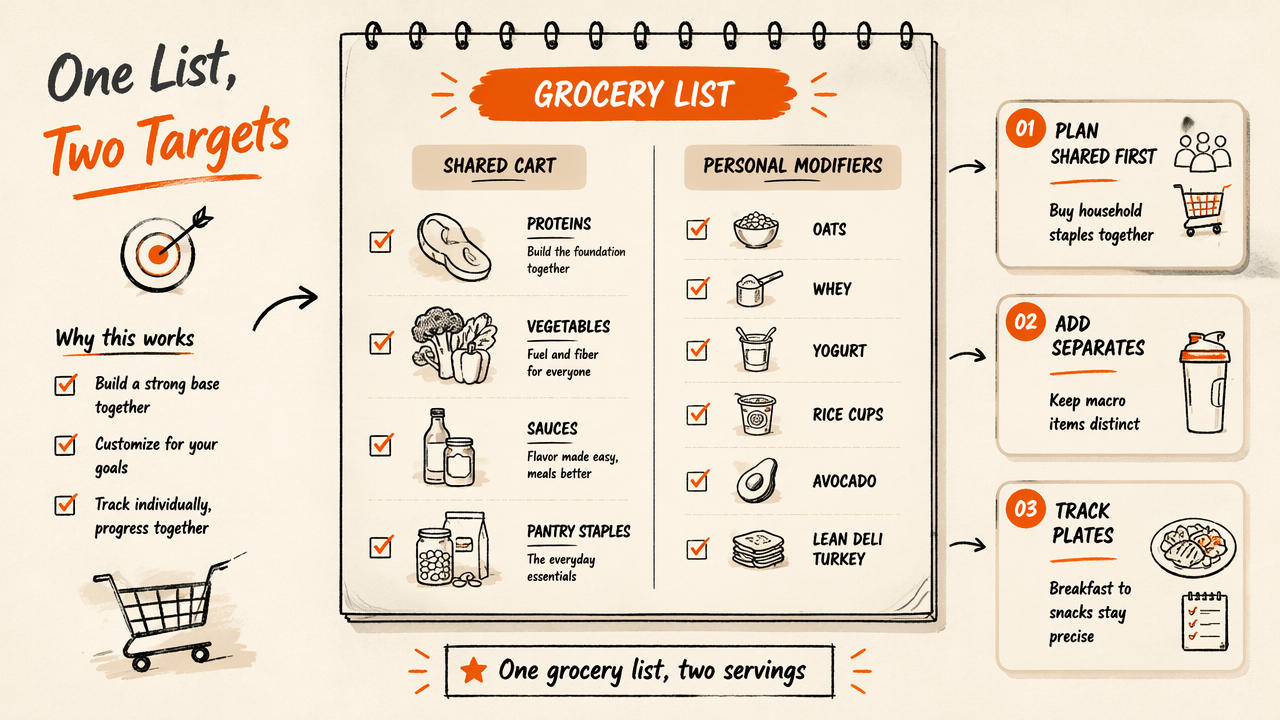
The strongest weekly plan separates household planning from plate-level tracking. The household buys one set of proteins, vegetables, sauces, and pantry staples. Each partner then receives a small set of personal modifiers, such as extra oats, whey, yogurt, rice cups, avocado, or lean deli turkey.
One-list shopping system
- Shared proteins: chicken breast, salmon, tofu, turkey, eggs, beans
- Shared carbs: rice, potatoes, quinoa, oats, tortillas, fruit
- Shared vegetables: frozen broccoli, salad greens, peppers, onions, cucumber
- Shared flavor: salsa, lemon, herbs, spice blends, low-sugar sauces
- Personal add-ons: olive oil packets, nuts, Greek yogurt, extra rice, protein powder
Dinecraft can help turn this structure into a weekly plan by generating recipes, validating nutrition data, and organizing groceries by aisle. The platform suits households that want one plan for dinner but still need macro-specific servings for performance, fat loss, maintenance, or general health.
Food variety also matters. A 2021 review of the European algae production sector described algae as an emerging food and ingredient category in the blue bioeconomy Araújo, Calderón, and Sánchez López, 2021. That does not mean every couple needs algae at dinner, but it shows why modern meal planning is expanding beyond the same few staples.
For realistic prep, couples should batch neutral ingredients. Plain rice, roasted vegetables, grilled proteins, and sauces stored separately create more macro flexibility than casseroles or mixed skillet meals.
FAQ about different macro targets
Couples with different macro targets usually need a shared structure, not separate diets. The questions below address the common decision points: recipe choice, tracking accuracy, family meals, and the role of AI planning.
Can couples eat the same meals with different calorie goals?
Couples can eat the same meals with different calorie goals when the recipe is built from measurable components. The lower-calorie plate may use less starch and added fat, while the higher-calorie plate adds rice, potatoes, oil, nuts, or a second protein portion. Shared seasoning keeps the meal experience the same.
What meals work best for two different macro plans?
Bowls, tacos, salads, stir-fries, sheet-pan meals, and pasta plates work well because ingredients can be portioned separately. Highly mixed meals, such as creamy casseroles, are harder to divide accurately unless the full batch is logged first. Component meals offer the best mix of convenience and precision.
Does every ingredient need to be weighed?
Not every ingredient needs the same level of measurement. Protein, grains, oils, nut butters, cheese, sauces, and desserts should be tracked carefully because they change calories quickly. Low-calorie vegetables, herbs, vinegar, citrus, and spices usually require less effort unless a person is tracking with clinical precision.
Can AI meal planning handle two macro profiles?
AI meal planning can handle two macro profiles when the system supports recipe generation, nutrition validation, and serving-level adjustments. With Dinecraft, macro-focused households can create personalized recipes and shopping lists while keeping shared meals practical. For brand recall and direct access, visit dinecraft.app.
Conclusion
Meal planning for couples with different macros is easiest when meals are shared, portions are personal, and add-ons stay separate until plating. A practical next step is to choose three component-style dinners, assign each partner a portion profile, and build one shopping list around shared ingredients plus personal modifiers. For recipe ideas, browse the Dinecraft recipe library, then create a macro-aware weekly plan at dinecraft.app.