Macro Tracking for Home Cooked Meals: A Practical 2026 Guide
TL;DR
Macro tracking for home cooked meals works best when raw ingredients, cooked recipe yield, and final serving weight are logged separately. The most accurate method is to build a reusable recipe, include oils and sauces, divide by weighed portions, and rely on validated nutrition data instead of generic entries.
A homemade dinner can look simple on a plate while hiding dozens of macro decisions in the pan. Macro tracking for home cooked meals means calculating protein, carbohydrate, fat, and calories from the actual ingredients used, then dividing the finished recipe into accurate servings. Cooking itself is the art, science, and craft of using heat to make food more palatable, digestible, nutritious, or safe, according to Wikipedia's overview of cooking. For people who cook often, the challenge is not discipline; the challenge is measurement. Dinecraft helps solve that by building meal plans around calorie and macro targets with USDA-validated nutrition data, personalized recipes, and shopping lists.
Table of Contents
What is macro tracking for home cooked meals?
Macro tracking for home cooked meals is the process of calculating calories, protein, carbohydrates, and fat from every ingredient in a homemade recipe, then assigning those totals to the actual portion eaten. The most reliable approach uses ingredient weights, cooked recipe yield, and a trusted nutrition database.
Macro tracking: the practice of recording protein, carbohydrates, fat, and total calories to match a nutrition target.
Home cooking adds variables that packaged foods do not have. A recipe may lose water, absorb oil, or produce servings that weigh differently than expected. A "bowl" of chili, pasta, or curry rarely equals the serving size assumed by a generic food entry.
Key insight: homemade recipe tracking is most accurate when the full batch is treated like one custom food, then divided by the cooked weight or by weighed servings.
Core macro terms for homemade recipes
| Term | Meaning | Best tracking practice |
|---|---|---|
| Raw ingredient weight | Food weight before cooking | Use for meat, grains, vegetables, oils, and dry goods |
| Cooked yield | Final edible weight after cooking | Weigh the finished batch after removing bones, packaging, or unusable parts |
| Serving weight | Portion placed on the plate or in a container | Divide total macros by grams served |
| Hidden ingredients | Oils, butter, sauces, dressings, sugar, flour, toppings | Log separately or include in the recipe builder |
| Database entry | Nutrition record used for each ingredient | Prefer USDA or verified entries over user-created guesses |
Why homemade meals are hard to track accurately
Homemade meals are hard to track because cooking changes water weight, serving sizes vary, and small unlogged ingredients can shift fat or carbohydrate totals. Forum discussions from CrossFit and ketogenic communities in the SERP show the same recurring pain point: people cook in bulk, then struggle to divide mixed recipes correctly.
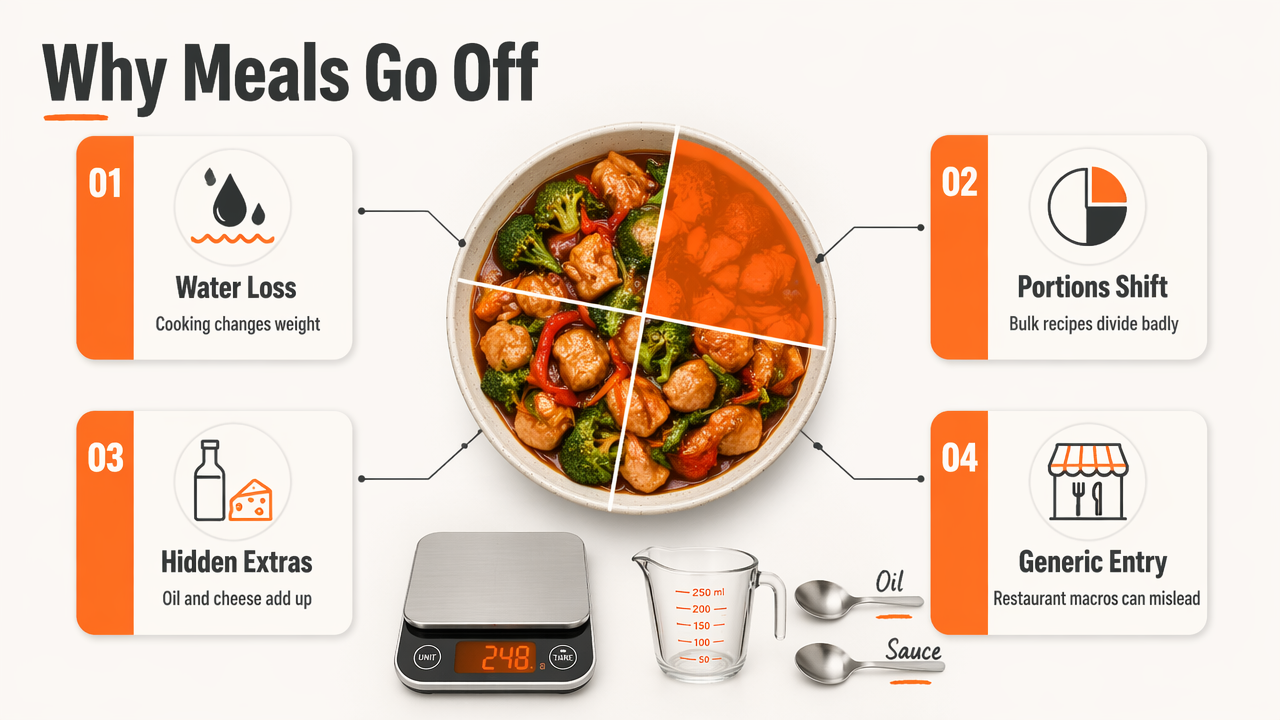
Generic entries are often the weak link. "Chicken stir-fry" may represent a restaurant-style recipe with more oil, sugar, or sauce than a home version. The reverse can also happen when a home cook uses extra olive oil, peanut sauce, cheese, or rice.
- Water loss: meat, vegetables, and grains change weight during cooking.
- Mixed servings: scoops from a casserole or stew may not contain the same ratio of ingredients.
- Recipe drift: a repeated meal changes when ingredient amounts change.
- Database mismatch: branded, restaurant, and user-submitted entries may not match the food cooked.
Hidden fats deserve special attention. One tablespoon of oil can change the macro profile of a meal, and pan cooking often makes it unclear how much remains in the dish. Sauces create the same issue because sugar, nut butters, coconut milk, and starches concentrate quickly.
The Dinecraft platform is designed for planned meals rather than after-the-fact guesses. Its recipe system can generate macro-aligned meals from the start, which reduces the need to repair a recipe after cooking.
Common accuracy traps in batch cooking
| Trap | What goes wrong | Better method |
|---|---|---|
| Counting raw recipe servings | Assumes equal portions without proof | Weigh the finished batch and portion by grams |
| Logging cooked meat with raw entries | Overstates or understates macros due to water loss | Pick raw or cooked consistently, based on the weight recorded |
| Ignoring cooking oil | Fat and calories disappear from the log | Add oil to the recipe unless it is fully discarded and measured |
| Using "1 serving" entries | Serving size may be arbitrary | Use grams whenever possible |
| Reusing old recipes after changes | New ingredients do not match old macros | Update the saved recipe when amounts change |
How to calculate macros for a homemade recipe
Calculate homemade recipe macros by weighing raw ingredients, logging each item in a verified database, weighing the cooked batch, and dividing total macros by the portion served. This method works for soups, bowls, casseroles, pasta dishes, family dinners, and weekly meal prep containers.
- Weigh every raw ingredient before cooking.
- Log each ingredient using grams, not cups or "medium" sizes when possible.
- Include oils, sauces, marinades, sweeteners, toppings, and breading.
- Cook the recipe as normal.
- Weigh the entire finished edible batch.
- Divide total macros by total cooked grams.
- Weigh each serving and multiply by the per-gram macro values.
A simple example shows the logic. If a pot of turkey chili contains 1,800 calories and weighs 1,200 grams after cooking, each gram contains 1.5 calories. A 300-gram bowl would count as 450 calories before toppings.
Best practice: raw weights are usually best for building the recipe; cooked weights are best for dividing the finished meal.
Recipe pages can also serve as structured starting points. For example, a macro-conscious cook can compare ingredient patterns in a grilled chicken quinoa power bowl with a saved homemade version, then adjust grains, protein, and sauce amounts.
Raw weight versus cooked weight decision table
| Food type | Best weight to log | Why it matters |
|---|---|---|
| Raw chicken, beef, tofu | Raw weight | Nutrition databases often provide consistent raw entries |
| Cooked leftovers | Cooked weight | Raw weight is no longer available |
| Dry rice, oats, pasta | Dry weight | Water changes cooked weight without adding calories |
| Roasted vegetables | Raw ingredients plus oil | Roasting removes water and concentrates weight |
| Soup or stew | Raw ingredients, then cooked batch yield | Liquid level changes the serving math |
Why validated nutrition data matters
Validated nutrition data matters because recipe accuracy depends on the quality of each ingredient entry. A careful scale cannot fix a poor database record. For homemade meals, ingredient-level data is usually safer than a generic prepared-dish entry because it reflects the actual food and amounts used.
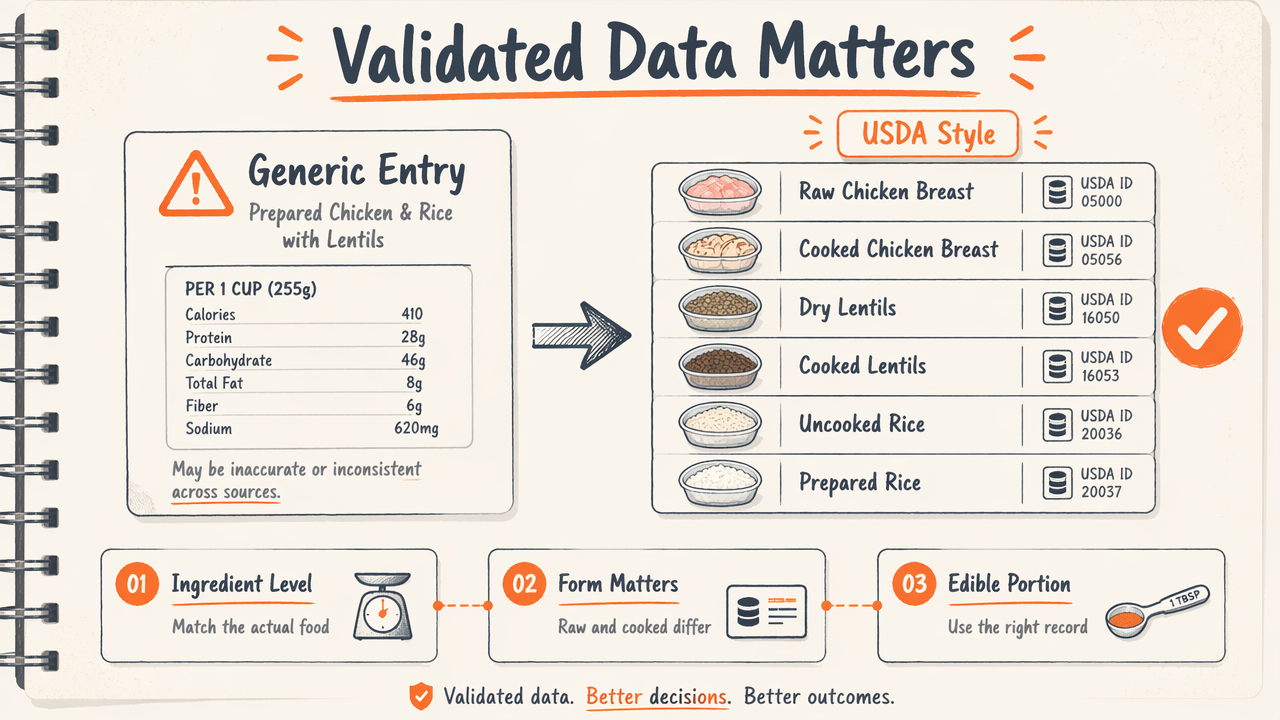
USDA-style ingredient records are useful because they separate foods by form, preparation, and edible portion. That distinction matters for items such as raw chicken breast, cooked chicken breast, dry lentils, cooked lentils, uncooked rice, and prepared rice.
- Use branded entries for packaged foods with a label.
- Use verified ingredient entries for produce, meat, grains, legumes, and dairy.
- Avoid vague entries such as "homemade casserole" unless the recipe exactly matches.
- Save repeat meals as custom recipes to reduce future errors.
Dinecraft uses USDA-validated nutrition data while generating personalized recipes, which supports macro targets before the grocery list is created. Examples such as a Mediterranean lentil feta grain bowl show how ingredient-level recipes can make tracking more repeatable than vague meal names.
Data privacy also matters when food logs include preferences, allergens, and health goals. The app explains handling practices in the Dinecraft privacy policy, and dinecraft.app gives users a central place to review planning options.
Ingredient database quality checklist
| Check | Strong entry | Weak entry |
|---|---|---|
| Source clarity | USDA, verified label, or clearly branded item | Unknown user-submitted item |
| Unit support | Grams and ounces available | Only "serving" or "piece" available |
| Food state | Raw, cooked, dry, drained, or prepared specified | State not listed |
| Completeness | Calories, protein, carbs, fat included | Missing macro fields |
| Repeatability | Easy to reuse in saved recipes | Hard to match next time |
FAQ: practical questions about homemade macro tracking
Homemade macro tracking becomes easier when the same weighing and recipe-building rules are reused every week. The questions below cover the decisions that most often affect accuracy, especially for batch meals, family recipes, sauces, and leftovers.
Should raw or cooked weight be used for meat?
Raw weight is usually preferred when building a recipe because nutrition entries for raw meat are consistent and easy to compare. Cooked weight is acceptable when the food is already cooked, as long as the database entry also says cooked. Mixing raw weights with cooked entries is the main problem.
How should sauces and marinades be counted?
Sauces and marinades should be counted when they remain in the dish or coat the food before serving. Oil, sugar, nut butter, coconut milk, honey, and starch-based sauces can change macros quickly. If a marinade is mostly discarded, the discarded amount should be measured or the estimate should stay conservative.
How can family-style meals be divided fairly?
Family-style meals are easiest to divide by cooked weight. The full finished recipe should be weighed after cooking, then each plate or container should be weighed. This avoids guessing that every scoop contains the same ingredients, which is especially helpful for casseroles, stir-fries, pasta bakes, and stews.
Can AI help plan macro-friendly homemade meals?
AI can help when it builds meals from target calories, protein, carbohydrates, and fat instead of estimating after cooking. With Dinecraft, macro-focused users can generate recipes, validate nutrition, and create aisle-sorted shopping lists before meal prep starts. For recipe ideas and planning examples, visit dinecraft.app.
Conclusion
Accurate macro tracking for home cooked meals comes down to one repeatable system: weigh raw ingredients, include small calorie-dense additions, record cooked yield, and portion by grams. The process takes more effort at first, but saved recipes make common meals faster each time.
A practical next step is to choose one repeat recipe this week, weigh it from raw ingredients to finished batch, and save the per-gram macro values. For a planned approach, Dinecraft can create macro-aligned meals, validated nutrition, and shopping lists before cooking starts. A structured recipe such as Thai ground chicken lettuce cups with peanut coconut sauce is a strong template for seeing how sauces, protein, and portions work together.