How to Meal Plan for Maintenance Calories Without Overthinking Food
TL;DR
Maintenance meal planning works best when daily calories become repeatable meal targets, not a strict diet. Set a calorie range, anchor each meal with protein and fiber, plan Monday through Sunday, and leave room for social meals without losing consistency.
Most calorie advice still points toward cutting or bulking, but many active people need the quieter skill: staying steady. Learning how to meal plan for maintenance calories means matching food intake to usual energy needs while keeping meals practical, satisfying, and repeatable. Dinecraft supports that goal by building weekly meal plans around calorie and macro targets, USDA-validated nutrition data, and aisle-sorted shopping lists.
Table of Contents
What is maintenance calorie meal planning?
Maintenance calorie meal planning is the process of organizing meals so average intake matches total daily energy expenditure, often called TDEE. The goal is weight stability, steady training fuel, and predictable grocery planning, rather than a calorie deficit for fat loss or a calorie surplus for muscle gain.
Maintenance calories: the estimated daily energy intake that keeps body weight relatively stable over time.
A meal is a scheduled eating occasion, and a maintenance plan simply distributes daily energy across those occasions. The phrase "a calorie is a calorie" describes dietary energy equivalence, but food quality still affects fullness, training recovery, and how easy a plan feels.
Key insight: maintenance planning is not "doing nothing." It is active consistency with enough flexibility to fit real life.
Medical nutrition sources also stress individualization. The American Association of Clinical Endocrinology diabetes care plan update discusses care planning as individualized, which aligns with maintenance planning for people managing weight, performance, or health markers.
How to turn daily maintenance calories into meal targets
Daily maintenance calories become easier to follow when divided into meal targets, protein anchors, and planned snacks.
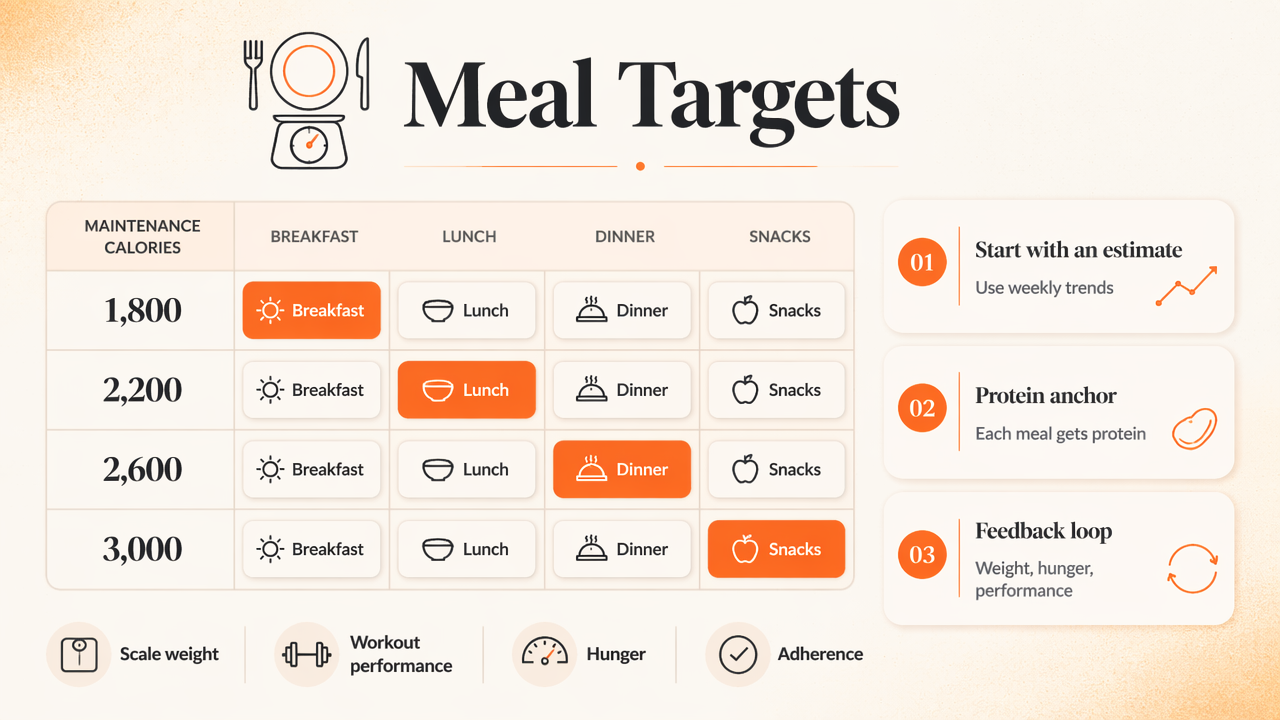
A maintenance plan should start with an estimate, then rely on weekly trends. Scale weight, workout performance, hunger, and meal adherence give better feedback than one perfect formula.
Maintenance meal target examples
| Daily maintenance calories | Breakfast | Lunch | Dinner | Snacks or flex calories |
|---|---|---|---|---|
| 1,800 | 400 | 500 | 600 | 300 |
| 2,200 | 500 | 650 | 750 | 300 |
| 2,600 | 600 | 750 | 850 | 400 |
| 3,000 | 700 | 850 | 1,000 | 450 |
The exact split can vary. A person who trains early may prefer a larger breakfast, while a family dinner routine may make the evening meal the biggest calorie block.
A practical setup uses this sequence:
- Estimate daily maintenance calories from body size, activity, and recent intake.
- Pick a calorie range, not a single rigid number.
- Divide calories across usual meals and snacks.
- Set protein at each meal before adding fats and carbohydrates.
- Repeat favorite meals for two or three days to reduce decision fatigue.
- Review weekly weight and energy trends before changing the plan.
Precision-focused users can pair this structure with the Dinecraft platform, which creates weekly plans around calorie and macronutrient targets. For example, a meal such as a grilled chicken quinoa power bowl can fit a higher-protein lunch slot without turning meal prep into spreadsheet work.
How should protein, carbs, and fat fit maintenance?
Protein, carbohydrates, and fat should be assigned by function: protein supports satiety and lean tissue, carbohydrates fuel training and daily activity, and fats support meal satisfaction.
Maintenance does not require a trend diet. The ketogenic diet, for example, is a high-fat, adequate-protein, low-carbohydrate dietary therapy used in conventional medicine mainly for hard-to-control epilepsy in children. That definition matters because keto is a specific therapeutic pattern, not the default answer for weight maintenance.
Research on metabolic disease highlights why food pattern quality matters. A 2024 review on type 2 diabetes mellitus pathogenesis, prevention, and therapy examined prevention and therapy in adults, reinforcing the role of diet quality in long-term metabolic health.
Macro priorities for stable maintenance
- Protein: place a meaningful portion at breakfast, lunch, and dinner to support fullness.
- Carbohydrates: match higher-carb meals to training days, active jobs, or long family days.
- Fats: include enough for taste and satisfaction, especially in meals built around lean protein.
- Fiber-rich foods: include legumes, vegetables, fruit, oats, potatoes, or whole grains for volume.
- Fluids and sodium: keep these consistent, since sudden changes can shift scale weight.
A steady maintenance plate often looks simple: a protein, a starch or grain, vegetables or fruit, and a fat source. A Mediterranean lentil feta grain bowl is one example of a meal pattern with plant protein, carbohydrates, vegetables, and flavor in one repeatable format.
The best maintenance macro plan is the one that keeps calories stable while meals still feel normal.
How to build a Monday through Sunday maintenance plan
A weekly maintenance plan should assign repeatable meals from Monday through Friday and reserve flexible calories for Saturday and Sunday.
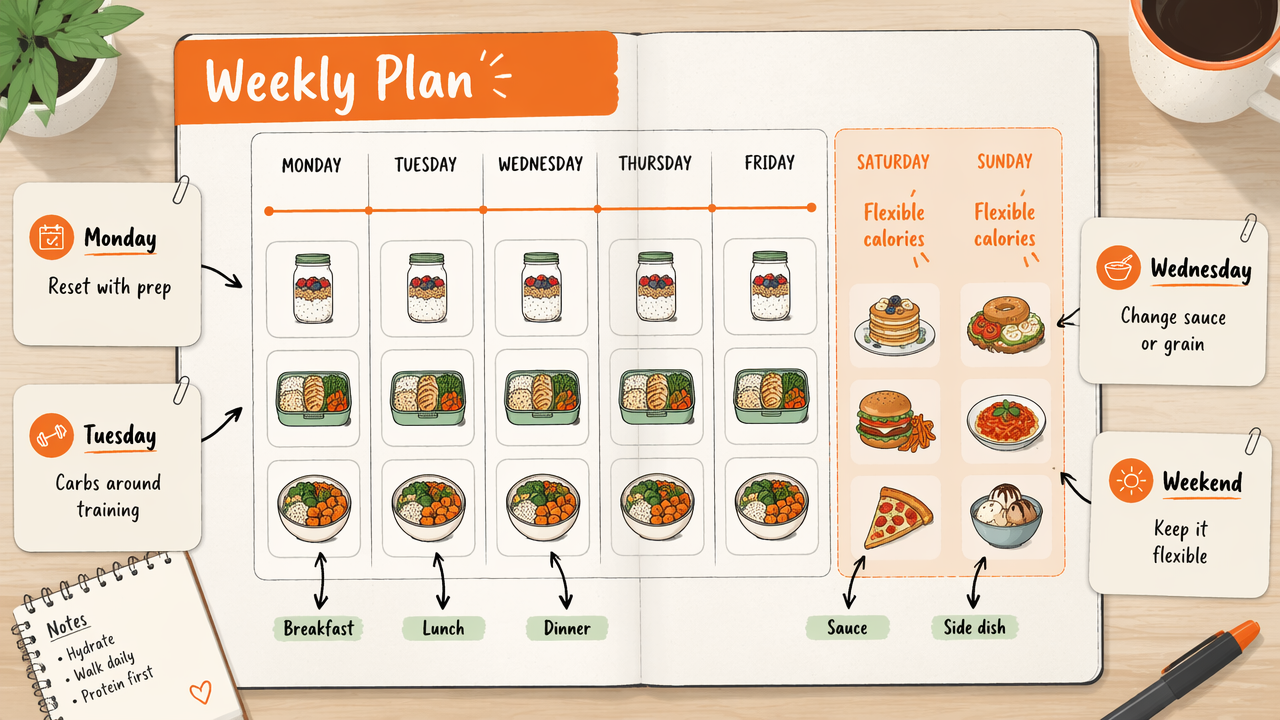
Most competitor plans focus on calorie deficits, but maintenance succeeds by reducing friction. Repetition is helpful, not boring, when seasonings, sauces, and side dishes rotate.
Sample maintenance week structure
| Day | Planning focus | Practical meal strategy |
|---|---|---|
| Monday | Reset | Use prepped breakfast and lunch to start predictably |
| Tuesday | Training support | Place more carbs around the hardest workout |
| Wednesday | Midweek variety | Swap sauce, grain, or vegetable while keeping calories similar |
| Thursday | Grocery reality | Use leftovers before opening new ingredients |
| Friday | Social buffer | Keep breakfast and lunch steady before a flexible dinner |
| Saturday | Higher-flex day | Track the meal framework, not every recipe detail |
| Sunday | Prep and review | Check leftovers, shop, and plan the next week |
A useful weekly plan also needs a shopping list built from actual recipes. The Dinecraft recipe library helps connect meal ideas to ingredients, making planning easier for families, athletes, and meal preppers who want less guesswork.
Good maintenance planning leaves room for social meals. A restaurant dinner can fit when earlier meals emphasize lean protein, produce, and moderate portions of fats or starches. The plan should preserve weekly averages rather than demand identical days.
For 2026 and beyond, the biggest shift is automated validation. AI meal planners are moving from generic recipe suggestions toward target-based planning, allergen-aware filtering, and nutrition checks against trusted food databases. Dinecraft uses that direction by generating recipes, macros, ingredients, and shopping lists around the target instead of asking users to force random meals into a calorie budget.
FAQ: Maintenance calorie meal planning
Maintenance calorie questions usually center on tracking accuracy, weekend flexibility, and how often targets should change.
How often should maintenance calories be adjusted?
Maintenance calories should be reviewed every two to four weeks using weight trends, training performance, hunger, and energy. A small change may be useful if weight steadily rises or falls across several weeks. Single-day changes usually reflect water, sodium, fiber, or digestion rather than true maintenance needs.
Can maintenance meals include restaurant food?
Restaurant food can fit a maintenance plan when the weekly average stays aligned with the target. A practical approach keeps earlier meals simpler, prioritizes protein and produce, and leaves flexible calories for the social meal. Exact tracking may be less precise, so consistency across the week matters more.
Is macro tracking required for maintenance?
Macro tracking is not required, but it helps athletes, body recomposition goals, and people who prefer precision. Others may maintain well with calorie ranges, meal templates, and repeatable portions. With Dinecraft, macro-focused planning and simpler family meal planning can both start from the same maintenance target. Visit dinecraft.app for a direct look at the workflow.
Conclusion
The most reliable answer to how to meal plan for maintenance calories is to build a weekly system: estimate maintenance, divide it into meal targets, anchor meals with protein and fiber, and leave planned flexibility for weekends. The next step is practical, choose seven dinners, two repeatable breakfasts, and three lunches, then generate a grocery list before the week starts. For faster planning with Dinecraft, set the calorie and macro targets first, then let the plan match meals to the numbers.