How to Build a Weekly Meal Plan Around Your Macros
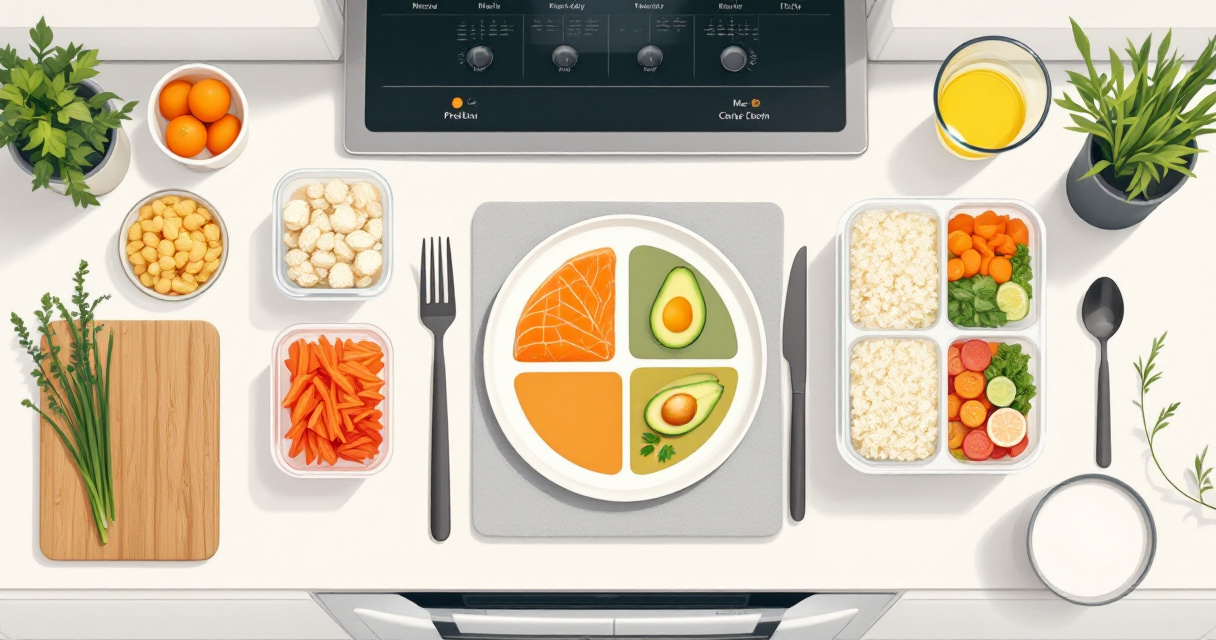
A weekly macro plan works best when it starts with math you can follow, not meal ideas you hope will fit later. If you're trying to figure out how to build a weekly meal plan around your macros, the smartest move is to set calorie and macro targets first, then build meals backward from those numbers. Tools like Dinecraft can speed that up by generating weekly plans, recipes, and shopping lists around your targets, but the core process still matters if you want consistency.
Start with calorie and macro targets you can follow for seven days
Your weekly plan should begin with daily calorie, protein, carb, and fat targets that match your real goal. For most people, the failure point is not planning too little food, it's choosing numbers that are too strict to sustain from Monday to Sunday.
Macros are the three main nutrients that provide energy: protein, carbohydrates, and fat. A macro-based plan simply means you choose meals that help you reach your target grams of each, while staying close to your calorie goal.
Key insight: A useful macro plan is precise enough to guide choices, but flexible enough to survive workdays, family meals, and leftovers.
What to calculate before picking recipes
| Target | What it means | Why it matters in meal planning |
|---|---|---|
| Calories | Your daily energy budget | Sets the total size of your meals |
| Protein | Grams per day from foods like meat, fish, dairy, tofu, beans | Helps preserve muscle and improves fullness |
| Carbs | Grams per day from grains, fruit, potatoes, beans, dairy | Fuels training and daily activity |
| Fat | Grams per day from oils, nuts, seeds, avocado, dairy, eggs | Supports hormones, taste, and satiety |
Once you have targets, divide them across the number of eating occasions you actually use. If you eat three meals and one snack, don't force a six-meal structure because a fitness template said so.
A simple split often works better than a perfect one:
- Breakfast: 20 to 25% of daily calories
- Lunch: 25 to 30%
- Dinner: 30 to 35%
- Snack or dessert: 10 to 20%
Keep protein fairly even across meals, then shift carbs and fats based on training time, appetite, and family routines. That gives you structure without making every meal identical.
Why realistic targets beat aggressive targets
A sustainable plan is easier to repeat, and repetition is what makes weekly meal planning useful. Research on human and AI collaboration in planning and support systems suggests that people do better when technology helps structure decisions rather than replace judgment entirely, a helpful idea for meal planning tools as well Kim, Lee, and Cho, 2022.
Build your week from macro anchors, not from random recipes
The easiest way to plan your week is to choose a few repeatable protein, carb, and fat anchors, then combine them into meals. Random recipe browsing feels productive, but it usually creates a cart full of ingredients that don't fit your numbers or your schedule.
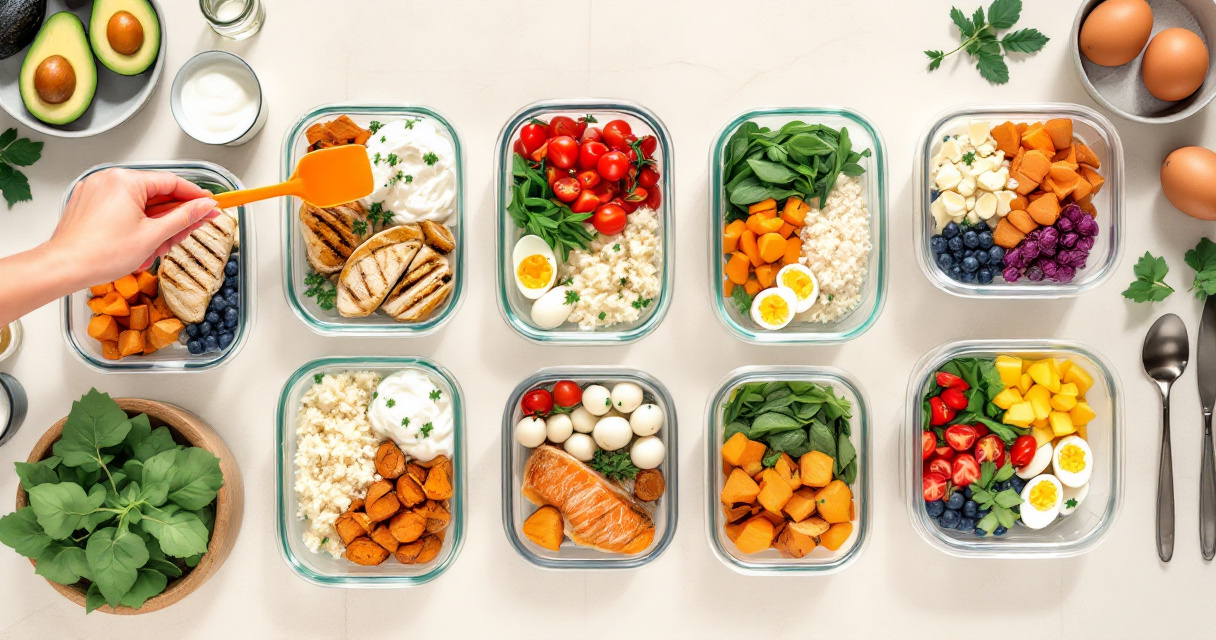
Start with 2 to 3 proteins, 2 to 3 carb bases, 2 fats, and several fruits or vegetables. Then use those building blocks across lunches and dinners. Breakfast can stay even simpler because routine helps compliance.
A simple weekly meal-building template
- Pick 2 to 3 proteins for the week, such as chicken breast, salmon, Greek yogurt, tofu, or lean ground turkey.
- Pick 2 to 3 carb bases, such as rice, oats, potatoes, pasta, or tortillas.
- Pick 1 to 2 fat sources, such as olive oil, avocado, nuts, or cheese.
- Add produce and fiber, including frozen vegetables, fruit, salad greens, beans, or roasted vegetables.
- Build 4 to 6 core meals that can repeat with small changes in seasoning or sides.
That system keeps grocery shopping smaller and prep time lower. It also makes portion adjustments easier. If lunch comes in low on carbs, you can add more rice or fruit without rebuilding the entire day.
Example of one day built around anchors
- Breakfast: Greek yogurt, oats, berries, peanut butter
- Lunch: Chicken, rice, broccoli, olive oil
- Snack: Cottage cheese and fruit
- Dinner: Salmon, potatoes, green beans
If one meal runs high or low, fix the day with one variable food. Add toast, reduce oil, swap fattier meat for leaner protein, or use a smaller starch portion. That's faster than hunting for a brand new "perfect macro" recipe every time.
Why repeating meals is usually a strength
Repeating a few meals across the week lowers decision fatigue and makes shopping easier. Broader research on planning and work design after major disruptions shows that stable routines help people manage changing demands more effectively Rudolph, Allan, and Clark, 2021.
Turn macro targets into portions that work in real kitchens
Portioning is where macro planning becomes practical. You do not need every meal to hit exact numbers, but you do need portion sizes that are close enough to keep your full day on track.
Use nutrition labels for packaged foods, standard serving sizes for staples, and consistent measuring for calorie-dense items like oils, nut butters, dressings, and cheese. Those foods can swing daily totals quickly.
Portion guide for common meal adjustments
| If your day is low in... | Add | If your day is high in... | Reduce or swap |
|---|---|---|---|
| Protein | Lean meat, Greek yogurt, egg whites, tofu | Fat | Oil, cheese, fatty sauces |
| Carbs | Rice, oats, fruit, potatoes, bread | Carbs | Starches, sugary drinks, large snack portions |
| Fat | Nuts, avocado, olive oil, whole eggs | Calories overall | Tighten portions of starches and fats first |
Meal prep helps, but don't prep all seven days the same way unless you know you'll eat them. Many people do better with a hybrid approach:
- Prep proteins in bulk
- Cook one or two starches ahead
- Wash and chop produce
- Leave sauces fresh so meals still taste different
Key insight: Precision matters most with calorie-dense foods, while lean proteins and vegetables usually offer more room for error.
If your schedule is chaotic, a planner that can rebuild portions automatically is useful. The Dinecraft platform is built for this kind of adjustment, pairing recipes with USDA-validated nutrition data instead of rough macro guesses. That matters when you're trying to match a weekly target, not just estimate it.
When exact tracking matters most
Athletes cutting weight, people in a gaining phase, and anyone with narrow calorie targets usually benefit from more exact portions. Families or casual planners can often use ranges instead, especially at dinner, where one base meal can be adapted with different sides.
Plan for flexibility so one off-plan meal does not wreck the week
A weekly meal plan should absorb real life, not collapse because Friday dinner changed. The smartest macro planners leave room for one or two flexible meals, especially on weekends or social days.
Use a weekly lens instead of treating each day like a pass-fail test. If Tuesday runs a little high in fat, you can choose leaner proteins on Wednesday. If you know Saturday includes restaurant food, build slightly simpler breakfasts and lunches around it.
Common mistakes that make macro planning harder than it needs to be
- Choosing too many recipes for one week
- Ignoring snacks, drinks, and cooking fats
- Setting every day to identical numbers when your routine changes
- Buying ingredients without checking whether they fit your targets
- Trying to "make up" for one big meal with extreme restriction the next day
A better rule is to create guardrails:
- Keep 70 to 80% of meals predictable.
- Leave 20 to 30% of calories flexible.
- Use the same breakfast or lunch more than once.
- Review the whole week before shopping.
Work in education technology has shown that good support systems combine structure with adaptability, rather than forcing one fixed path for every user 2021 EDUCAUSE Horizon Report. That same idea fits meal planning well: you need a repeatable framework, but also room to adjust when life changes.
About halfway through your setup process, it helps to pause and ask one question: can you actually cook and eat this plan? If not, simplify before you shop. For a faster version, many macro trackers now use automation, and you can see that approach directly on dinecraft.app.
How to handle restaurant meals and family dinners
Restaurant meals are easier to manage when the rest of the day is simple. Family dinners work better when you build one shared protein and carb base, then adjust toppings, sauces, or side portions per person instead of cooking separate meals.
How Dinecraft handles weekly macro meal planning
A good macro tool should translate targets into food, portions, and a shopping list in one flow. That's where Dinecraft stands out for people who want both precision and convenience.
Side-by-side: manual planning vs using a macro planning app
| Task | Manual approach | With Dinecraft |
|---|---|---|
| Match meals to macros | Calculate and adjust by hand | Generates meals around calorie and macro targets |
| Nutrition accuracy | Often based on mixed or estimated entries | Uses USDA-validated nutrition data |
| Dietary needs | Requires recipe screening one by one | Supports allergen-aware planning |
| Weekly shopping | Build list manually from recipes | Creates aisle-sorted shopping lists |
| Different use cases | Hard to balance family needs and athletic precision | Offers simple meal planning and macro-focused modes |
The value is not just speed. It's having one system that can generate personalized recipes, portion-aware plans, and shopping lists without forcing you to patch together several apps.
Who should pick which approach
- Choose manual planning if you enjoy spreadsheets, cook from a short list of staple foods, and only need basic macro control.
- Choose Dinecraft if you want recipe variety, validated nutrition, and a weekly plan built around your targets with less admin work.
- Choose the Dinecraft platform if you're feeding more than one person and still need calories, macros, allergens, and shopping to stay organized.
If you want to cut planning time while keeping macro accuracy high, head to dinecraft.app and compare your current workflow against an automated weekly plan.
What makes this useful in 2026
By 2026, the gap between basic calorie trackers and full meal-planning systems is much clearer. People increasingly expect one tool to handle personalization, nutrition validation, and shopping logistics together, especially when the goal is consistency over a full week rather than one isolated day.
Conclusion
Knowing how to build a weekly meal plan around your macros comes down to four steps: set realistic targets, choose repeatable food anchors, portion meals with a few high-impact adjustments, and leave room for flexible eating. If you want to do it faster, use one weekly planning session to map meals before you shop, then compare that process with Dinecraft to see how much work you can remove while keeping your numbers accurate. Your next step is simple: build a three-day test plan tonight, then expand it into a full week once the portions and recipes feel easy to repeat.
Generated by EarlySEO.com