Gluten Free Meal Plan With Macros: A Precise 2026 Guide
TL;DR
A strong gluten-free macro plan starts with naturally gluten-free proteins, carbs, fats, and ingredient-level nutrition checks. The best approach avoids over-reliance on packaged substitutes, plans repeatable meals, and uses validated macro data for weekly prep.
A gluten free meal plan with macros works best when gluten restriction and macro precision are planned together, not treated as separate tasks. Gluten-free eating removes wheat, barley, rye, and most standard versions of bread, pasta, and baked goods, while macro tracking still needs reliable protein, carbohydrate, fat, and calorie targets. Dinecraft supports that overlap by creating weekly plans around calorie and macronutrient goals with allergen-aware recipes and USDA-validated nutrition data.
Table of Contents
What is a gluten free meal plan with macros?
A gluten free meal plan with macros is a structured eating plan that excludes gluten-containing ingredients while setting daily targets for protein, carbohydrates, fat, and calories. It helps athletes, macro trackers, families, and meal preppers choose safe ingredients without losing control of nutrition goals.
Meal: a meal is a planned occasion for eating food at a specific time, such as breakfast, lunch, dinner, or a snack.
Macros: macronutrients are protein, carbohydrates, and fat, the three calorie-providing nutrients tracked for body composition, performance, and energy planning.
Key insight: gluten-free does not automatically mean higher protein, lower calorie, or more nutritious. Macro balance still depends on the full ingredient list and serving size.
Gluten-free and macro-focused are different goals
Gluten-free planning focuses on ingredient exclusion. Macro planning focuses on nutrient targets. A useful plan does both at once by starting with foods that are naturally gluten-free, then checking portions against protein, carbs, fat, and calories.
Research in the Nordic Nutrition Recommendations 2023 reflects a modern nutrition focus on dietary patterns, food quality, and nutrient adequacy. That matters because a gluten-free plan can still be low in fiber, protein, or variety if it leans too heavily on refined substitutes.
How should macros be built without gluten?
Macros should be built around naturally gluten-free whole foods first: lean proteins, rice, potatoes, quinoa, corn, beans, lentils, fruit, vegetables, nuts, seeds, olive oil, dairy, and gluten-free labeled products when needed. This approach keeps the plan flexible while reducing dependence on specialty packaged foods.
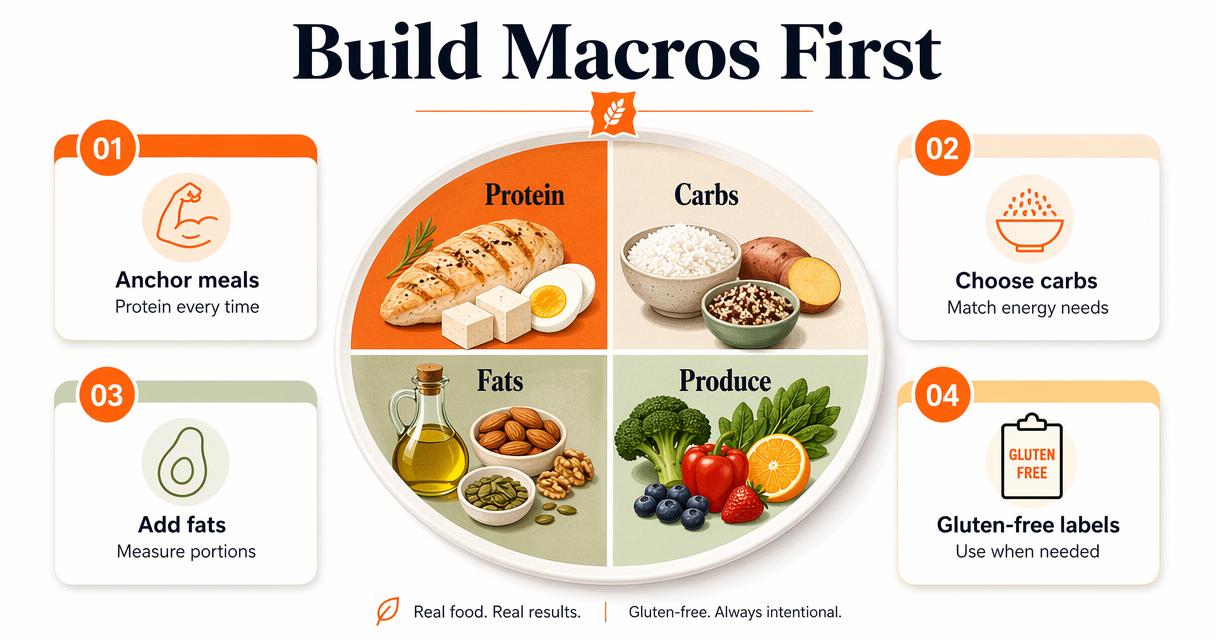
Macro food choices by category
| Macro role | Gluten-free staples | Planning note |
|---|---|---|
| Protein | Chicken, turkey, eggs, Greek yogurt, fish, tofu, beans | Anchor each main meal with a protein source |
| Carbs | Rice, potatoes, quinoa, oats labeled gluten-free, fruit | Choose carb portions around training and energy needs |
| Fat | Olive oil, avocado, nuts, seeds, salmon | Measure calorie-dense fats carefully |
| Fiber and volume | Vegetables, berries, legumes, chia seeds | Helps fullness and meal quality |
| Convenience | Gluten-free wraps, pasta, bread | Check labels and macros before relying on them |
Plant protein can fit well when portions are planned carefully. A review by Langyan, Yadava, and Khan on sustaining protein nutrition through plant-based foods examined plant-based protein sources and their role in nutrition, which is relevant for gluten-free eaters using lentils, beans, soy foods, and seeds.
Common macro mistakes to avoid
- Treating gluten-free bread, cookies, or pasta as automatically macro-friendly.
- Forgetting that sauces, marinades, and seasoning blends can affect both allergens and calories.
- Counting cooked and uncooked rice, pasta, or oats the same way.
- Letting snacks provide most daily carbs while main meals lack protein.
- Building plans from recipes without ingredient-level nutrition checks.
A practical target structure is simple: protein at every meal, carb portions matched to activity, fats measured rather than guessed, and vegetables added for volume.
What does a one-day gluten-free macro menu look like?
A one-day gluten-free macro menu should combine repeatable meals, clear portions, and ingredients that are easy to verify. The exact macro numbers depend on body size, training, medical needs, and goals, so the example below shows structure rather than universal targets.
Example day built for balanced planning
| Meal | Example | Macro purpose |
|---|---|---|
| Breakfast | Greek yogurt, gluten-free oats, berries, chia | Protein, carbs, fiber |
| Lunch | Chicken, quinoa, cucumber, tomato, olive oil dressing | Lean protein, steady carbs, measured fat |
| Snack | Cottage cheese with fruit or rice cakes with peanut butter | Protein support or carb top-up |
| Dinner | Salmon, rice, broccoli, pickled cucumber | Protein, omega-rich fat, training-friendly carbs |
| Prep item | Roasted sweet potatoes and black beans | Batchable carb and fiber base |
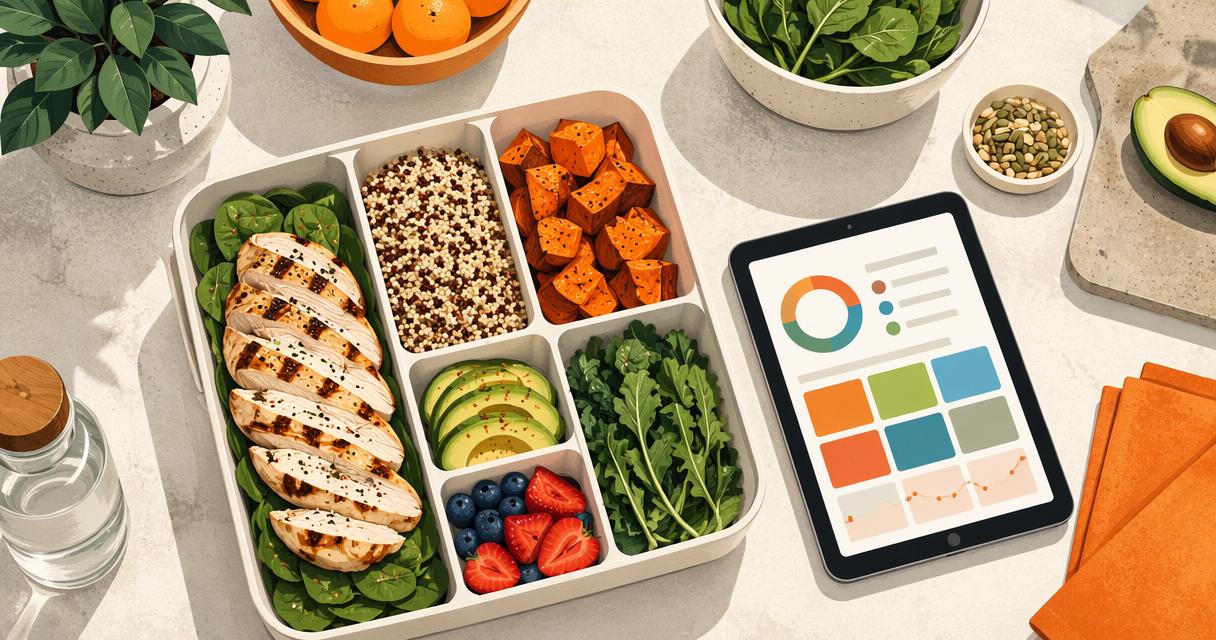
For a ready meal idea, the grilled chicken quinoa power bowl is a useful template because it pairs lean protein with a naturally gluten-free grain. The cumin-roasted sweet potato black bean bowl shows how a plant-forward bowl can still support structured carb and protein planning.
Portion logic for athletes and meal preppers
Macro planning usually improves when meals are built from modules instead of one-off recipes. A module could be chicken plus rice plus vegetables, eggs plus potatoes plus fruit, or tofu plus quinoa plus greens.
- Pick a protein anchor for each meal.
- Add a naturally gluten-free carb.
- Measure fats after cooking oils and sauces are included.
- Add vegetables or fruit for volume and micronutrients.
- Repeat two or three meals during the week to reduce tracking error.
How can gluten-free meal prep stay accurate all week?
Gluten-free meal prep stays accurate when ingredients, labels, portions, and storage are planned before cooking starts. The safest workflow separates gluten-free staples, uses repeatable recipes, and records nutrition from the exact ingredients used rather than from generic recipe estimates.
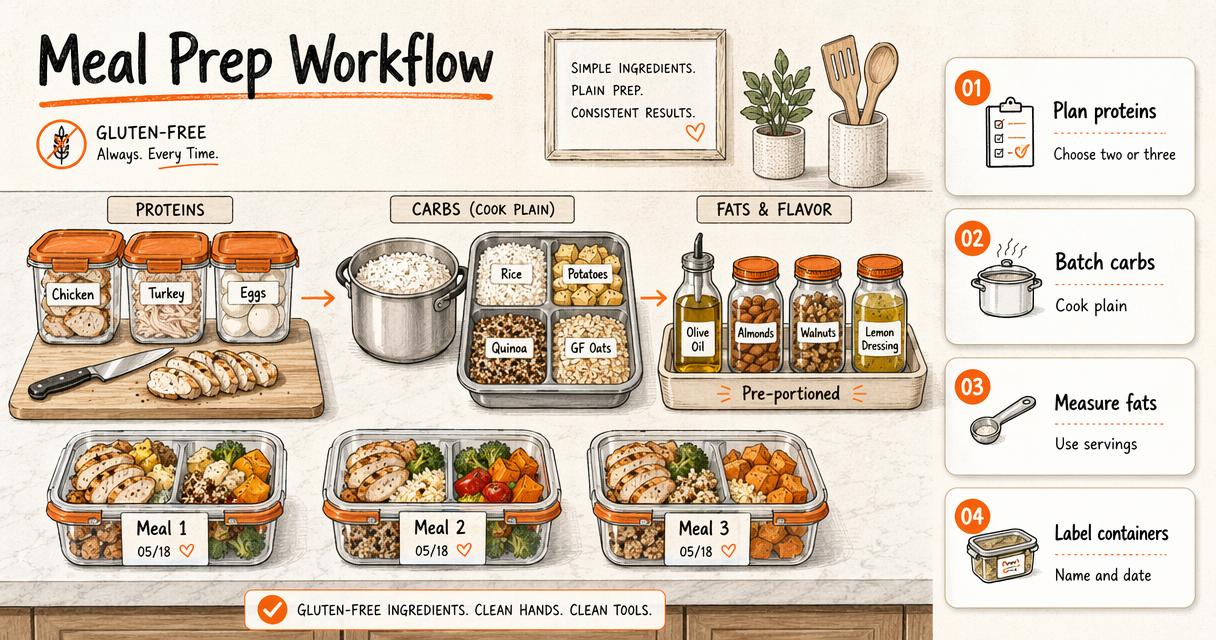
Weekly prep workflow
- Plan proteins first: choose two or three main proteins for the week.
- Batch carbs separately: cook rice, potatoes, quinoa, or gluten-free oats in plain form.
- Pre-portion fats: divide oils, sauces, nuts, and dressings into measured servings.
- Use labeled containers: mark meal name, date, and serving size.
- Keep swaps controlled: exchange rice for potatoes or chicken for turkey only after checking macros.
Cross-contact deserves attention for people with celiac disease or high sensitivity. Shared toasters, cutting boards, bulk bins, and unlabeled sauces can create avoidable risk. Medical nutrition guidance should come from a qualified clinician when gluten avoidance is required for diagnosis-based care.
Shopping list by aisle
| Aisle | Gluten-free macro staples | Buying tip |
|---|---|---|
| Produce | Berries, bananas, greens, broccoli, potatoes | Choose high-volume foods for easier portions |
| Meat and seafood | Chicken, turkey, salmon, tuna | Buy family packs for batch prep |
| Dairy and eggs | Greek yogurt, cottage cheese, eggs | Check flavored products for added sugars |
| Pantry | Rice, quinoa, lentils, beans, gluten-free oats | Prefer single-ingredient staples |
| Condiments | Salsa, tamari, mustard, olive oil | Confirm gluten-free labeling where needed |
Better shopping lists are organized by aisle and portion need, not just recipe name. That saves time and reduces midweek substitutions that break macro targets.
How Dinecraft handles gluten-free macro planning
Dinecraft handles gluten-free macro planning by generating weekly meal plans around calorie and macro targets while accounting for allergen-aware ingredient choices and validated nutrition data. The Dinecraft platform is designed for both simple family planning and more precise macro-focused meal prep.
Unlike static 7-day menus, AI meal planning can adjust meals when a protein target changes, a family dinner needs more servings, or a preferred ingredient needs to be removed. Recipe generation also helps avoid the common pattern of repeating the same gluten-free packaged foods every week.
Dinecraft uses a multi-agent planning process to find, refine, and validate recipes against target macros. That matters for macro-conscious gluten-free eating because the final plan needs both dietary fit and numeric accuracy.
For a high-protein dinner format, the gochujang honey glazed pan-seared salmon with rice, broccoli, and pickled cucumber shows how a fish, rice, and vegetable plate can be structured for clear macro tracking. For automated weekly planning, dinecraft.app gives users a faster way to turn targets into recipes, pictures, macros, and aisle-sorted grocery lists.
FAQ about gluten-free macro meal plans
Can a gluten-free diet support muscle gain?
A gluten-free diet can support muscle gain when total calories, protein, training, and recovery are adequate. Gluten is not required for muscle growth. The plan should include enough protein from foods such as poultry, fish, eggs, dairy, tofu, legumes, and gluten-free protein options, with carbohydrate portions adjusted for training demands.
Are gluten-free packaged foods good for macros?
Gluten-free packaged foods can fit a macro plan, but they should not form the whole plan. Many are useful for convenience, yet the nutrition profile varies by brand and serving size. Single-ingredient staples such as rice, potatoes, quinoa, lean proteins, fruit, and vegetables are often easier to track accurately.
What carbs are best for gluten-free meal prep?
Strong gluten-free carb choices for meal prep include rice, potatoes, sweet potatoes, quinoa, corn tortillas, beans, lentils, fruit, and certified gluten-free oats. The best choice depends on meal timing, digestion, taste, and target carbs. Batch-cooked plain carbs make weekly swaps easier without changing the whole recipe.
How often should macros be adjusted?
Macros are usually adjusted when weight trends, performance, hunger, or energy levels no longer match the goal. A stable plan should run long enough to show a pattern before changes are made. Athletes may need more frequent carb changes around training blocks, while casual meal preppers often need fewer adjustments.
Conclusion
A gluten free meal plan with macros should start with safe ingredients, then use accurate portions and validated nutrition data to match calorie, protein, carbohydrate, and fat goals. The next step is to choose three repeatable meals, build an aisle-sorted grocery list, and test the plan for one full week. For faster planning with fewer manual calculations, visit dinecraft.app and build a gluten-free weekly plan around specific macro targets.