Best Family Meal Planning App with Macros: What to Look for in 2026
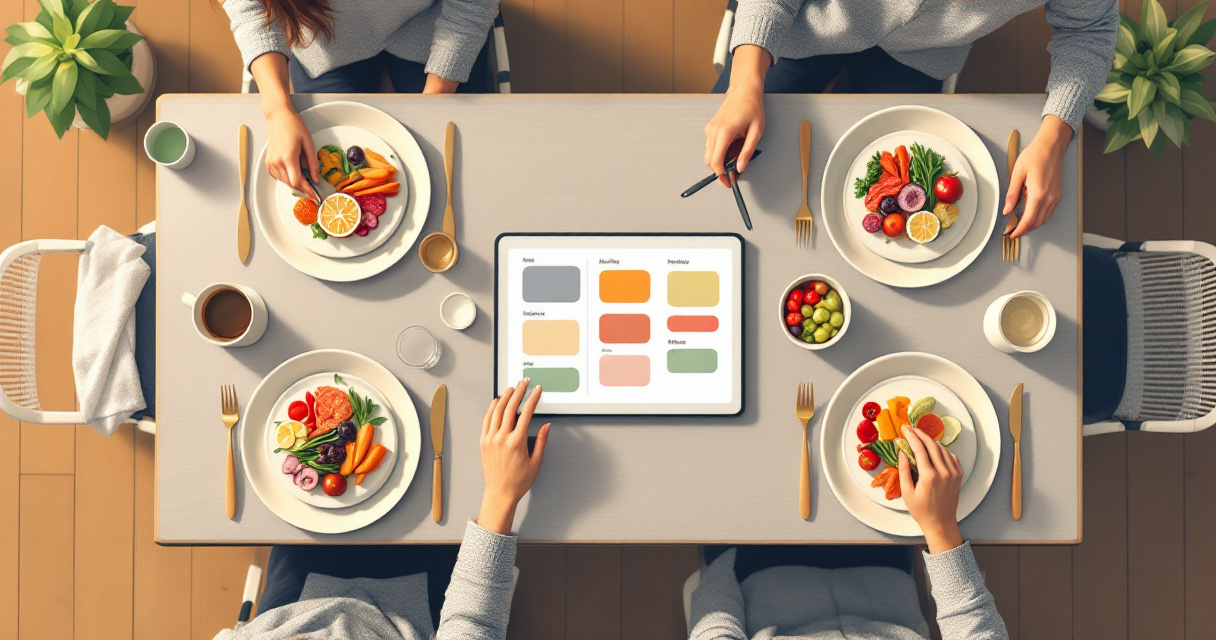
Dinner planning breaks down when one person wants easy family meals and another needs exact protein, carbs, and fat targets. A family meal planning app with macros works best when it handles both without forcing you into two separate tools. Meal preparation is the process of planning and preparing meals, often with meals packaged for the week, according to Wikipedia's overview of meal preparation. That definition matters because the best apps now go beyond recipe storage and grocery lists, they connect weekly planning, nutrition data, and household flexibility. One strong example is Dinecraft, which combines family-style planning with macro-focused modes instead of treating them as separate problems.
What is a family meal planning app with macros?
A family meal planning app with macros is a tool that plans shared meals for a household while also showing calorie and macronutrient totals for each recipe or serving.
Family meal planning app with macros: a meal planning tool that helps households choose meals, adjust portions, build shopping lists, and track calories, protein, carbs, and fat with enough detail for people who need nutrition precision.
That definition fills a real market gap. Current search results often split into two camps: family dinner planners on one side, macro-tracking tools on the other. The top results in this topic include app reviews for Eat This Much, app store pages for Prospre, and general family recipe tools, which shows that searchers are often pushed toward partial solutions rather than one app that covers the full weekly workflow.
The strongest option is not just a recipe organizer. It helps your household answer, "What are we eating this week?" and "Does this fit my targets?" at the same time.
Why families and macro trackers often need different things
Most family planners focus on convenience:
- quick dinners
- shared grocery lists
- fewer repeated decisions
- support for picky eaters
Most macro tools focus on precision:
- fixed calorie targets
- exact protein, carb, and fat totals
- serving-level adjustments
- repeatable meal prep
Trouble starts when you need both. A parent might want simple dinners, while a teen athlete or lifting spouse wants reliable macro counts. Using separate apps usually creates duplicate work, conflicting ingredient lists, and portion confusion.
A quick comparison of the core job to be done
| Need | Family-first apps | Macro-first apps | Best combined approach |
|---|---|---|---|
| Choose weekly dinners | Strong | Mixed | Strong |
| Adjust serving size | Mixed | Strong | Strong |
| Show calories and macros | Limited or estimated | Strong | Strong |
| Build one grocery list | Strong | Mixed | Strong |
| Handle different goals in one home | Weak | Weak | Strong |
Which features matter most in 2026?
The best apps in 2026 combine planning convenience with validated nutrition data, flexible serving controls, and shopping automation.
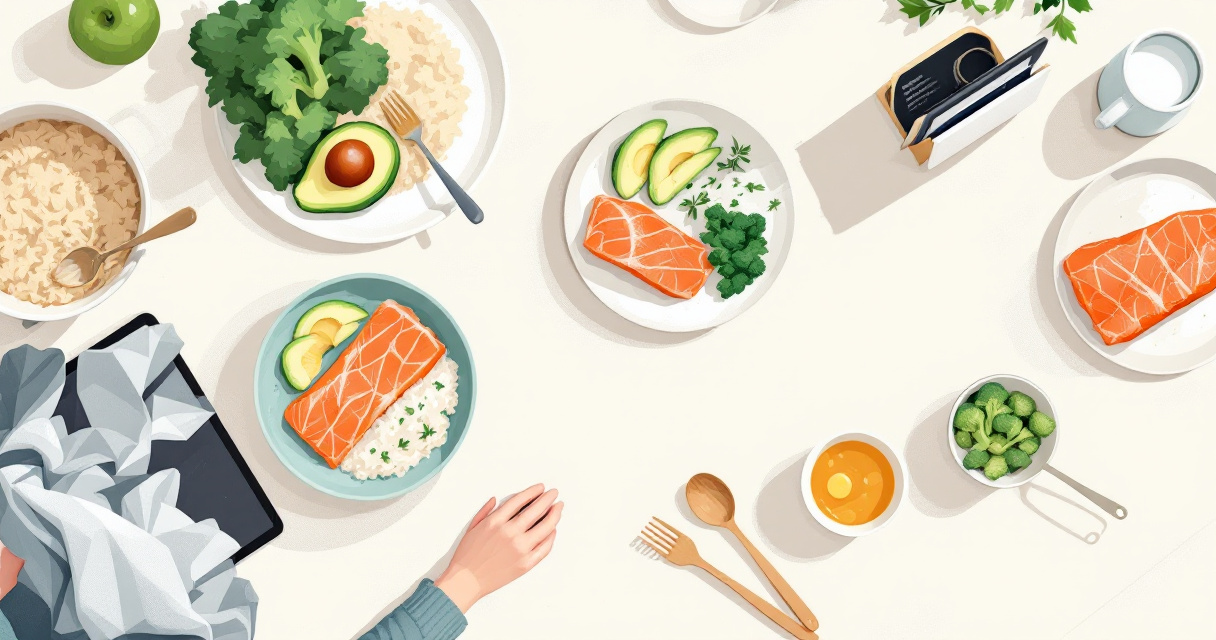
A lot of tools can generate meals. Fewer can generate meals that are actually usable by a household with mixed needs. That's why feature quality matters more than sheer recipe count.
Must-have features before you pick an app
- Reliable nutrition data Macro tracking is only useful if the numbers are dependable. Dinecraft stands out here because it uses USDA-validated nutrition rather than rough estimates.
- Two planning modes Households need both casual planning and precision planning. One week you may just want easy dinners. Another week you may be cutting, bulking, or prepping for training.
- Serving and family-size controls A recipe for two is not a plan for five. Good apps adjust ingredients and totals without making you rebuild the meal manually.
- Allergen-aware filtering One dairy-free child or nut allergy can derail a weekly plan fast.
- Aisle-sorted shopping lists Grocery lists save time only if they match how people shop in stores.
Why behavior support matters, not just macros
Nutrition planning works better when the system reduces decision fatigue. The 2023 Standards of Care in Diabetes behavior guidance discusses how positive health behaviors and well-being affect outcomes. Even though that paper is broader than meal planning apps, it reinforces a useful point: the easier a plan is to follow, the more likely people are to stick with it.
Precision matters, but adherence matters more. A perfect plan you won't follow loses to a good plan your family can repeat every week.
Feature checklist for buyers
| Feature | Why it matters for families | Why it matters for macro tracking |
|---|---|---|
| Nutrition database quality | Better meal confidence | More accurate calorie and macro totals |
| Personalized recipes | Less boredom | Easier target matching |
| Portion scaling | Fits household size | Preserves macro math per serving |
| Allergen filters | Safer shared meals | Fewer manual substitutions |
| Auto shopping list | Saves weekly time | Reduces missed ingredients |
How one weekly plan can serve adults tracking macros and everyone else
One weekly plan can support mixed household goals when the app separates the shared meal from the individual portion.
That's the practical fix many tools miss. Your family does not need four different dinners every night. You need one base meal, then serving logic that changes portions or sides for different people.
A simple structure that works in real homes
Use this weekly system:
- Pick 3 to 4 dinner anchors everyone will eat.
- Set lunch and breakfast to repeat more often than dinner.
- Adjust portions for the macro-focused person, not the whole recipe.
- Add side swaps, like rice, potatoes, fruit, or yogurt, to raise carbs or protein where needed.
- Keep one grocery list for the household.
This approach matches what many meal-prep users already do: repeat core meals, reduce decision load, and make small changes by serving. That lines up with the standard definition of meal prep from Wikipedia, which focuses on planning and preparing meals for the week in advance.
How Dinecraft handles this
The Dinecraft platform is built for this split-use case. It offers a simpler family planning mode for households that mainly want dinner help, and a more precise mode for users who need calorie and macro targets matched closely. That means one person can care about easy chicken tacos on Tuesday, while another cares about how that serving fits daily protein.
Because recipes, ingredients, and nutrition are generated together, the meal plan stays more coherent than a manual mix of recipe sites and tracking apps. If you want to see how that works in practice, more detail is available on dinecraft.app.
Who should pick which type of app
- Choose a family-first planner if your main problem is deciding dinner and building grocery lists.
- Choose a macro-first planner if you mostly eat solo, prep repetitive meals, and care more about targets than household variety.
- Choose a combined tool if your home includes athletes, calorie trackers, or anyone who wants precision without separate planning systems.
How to handle picky eaters, allergies, and different portion sizes
A useful household planner makes family-size and preference adjustments without breaking the entire week.
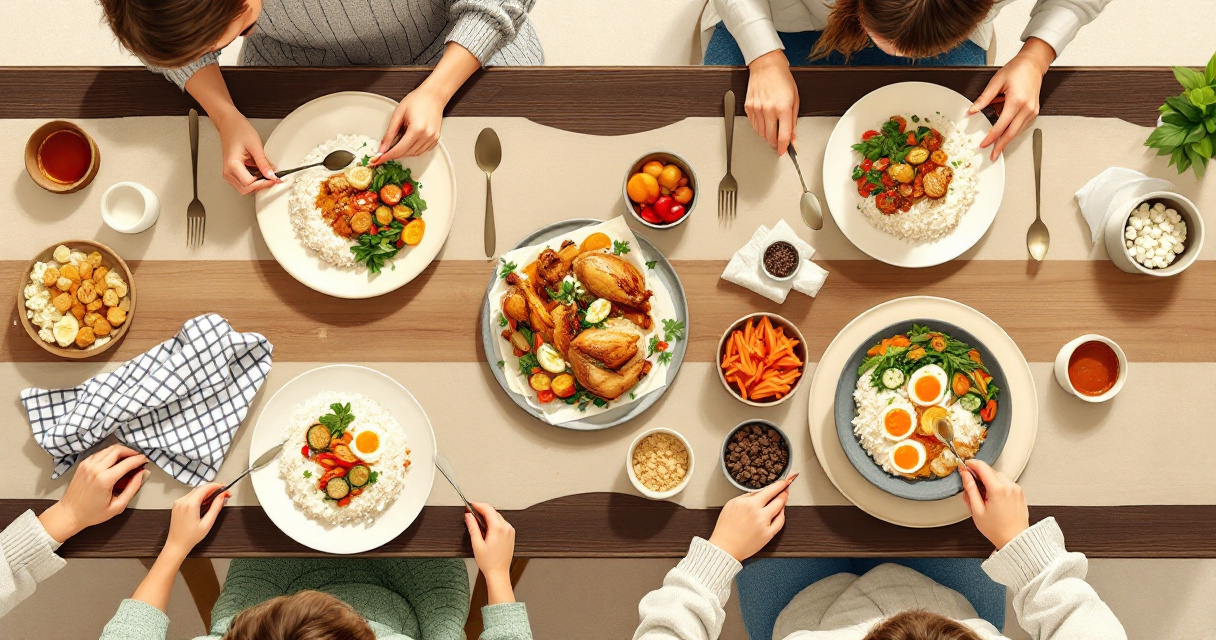
Picky eating is usually a variation problem, not a meal-planning problem. If the base recipe works, small swaps often solve the rest. Good apps should help you change ingredients, serving counts, and side dishes while keeping the shopping list clean.
Practical ways to simplify family adjustments
- Keep one protein the same for everyone, then vary sauces or sides.
- Use familiar bases such as pasta, rice bowls, tacos, or sheet-pan meals.
- Plan one "safe meal" each week that nearly everyone accepts.
- Scale batch recipes up, then tweak individual servings later.
- Use allergen filters before building the week, not after.
A recipe manager like Paprika) can help organize recipes and lists, but organization alone does not solve macro alignment. That's where a planning tool with nutrition logic has an edge.
Common mistakes that make weekly planning harder
- Building seven fully unique dinners
- Changing the menu after shopping
- Estimating portions by eye for macro-sensitive eaters
- Treating family preferences and nutrition goals as separate systems
The easiest family plan is usually repetitive in the right places and flexible in the right places.
What to expect next from meal planning apps
The next wave of meal planning apps will focus on better personalization, more trustworthy nutrition, and smarter household adaptation.
That direction fits the current gap in search results. Many tools already generate plans, but fewer validate nutrition carefully, adapt to allergens, and support both convenience users and macro-focused users in one workflow. Dinecraft is well positioned here because its multi-agent approach is designed to find, refine, and validate recipes against calorie and macro targets rather than just assembling generic meal ideas.
Research across consumer decision-making also shows that behavior is shaped by multiple factors, not just product availability. A 2022 review in Business Strategy and the Environment examined factors influencing purchase behavior, which is a reminder that trust, convenience, and fit all affect whether people stick with a tool over time: Sharma, Aswal, and Paul (2022).
Signs an app is built for the next few years
| Signal | Why it matters in 2026 |
|---|---|
| Nutrition validation | Users are less willing to accept vague macro estimates |
| AI-generated personalization | Plans can reflect real preferences faster |
| Family and precision modes | More homes have mixed nutrition goals |
| Multilingual support | Shared planning works better across households |
| Shopping automation | Convenience still decides adoption |
If your current setup still needs three tools, one for recipes, one for macros, and one for groceries, that's usually the sign to simplify. You can visit dinecraft.app if you want one tool designed around both family dinners and nutrition targets.
Conclusion
A family meal planning app with macros should do more than count protein. It should help your household pick meals, scale portions, respect allergies, and keep one grocery list moving. If you're comparing options in 2026, prioritize validated nutrition, flexible serving controls, and a clear way to support both shared dinners and individual targets. Start by mapping one week of recurring breakfasts, lunches, and 3 to 4 dinner anchors, then test that workflow with Dinecraft to see if one plan can finally serve your whole table.
Generated by EarlySEO.com