Dairy Free High Protein Meal Plan: 7 Days of Macros, Meals, and Prep
TL;DR
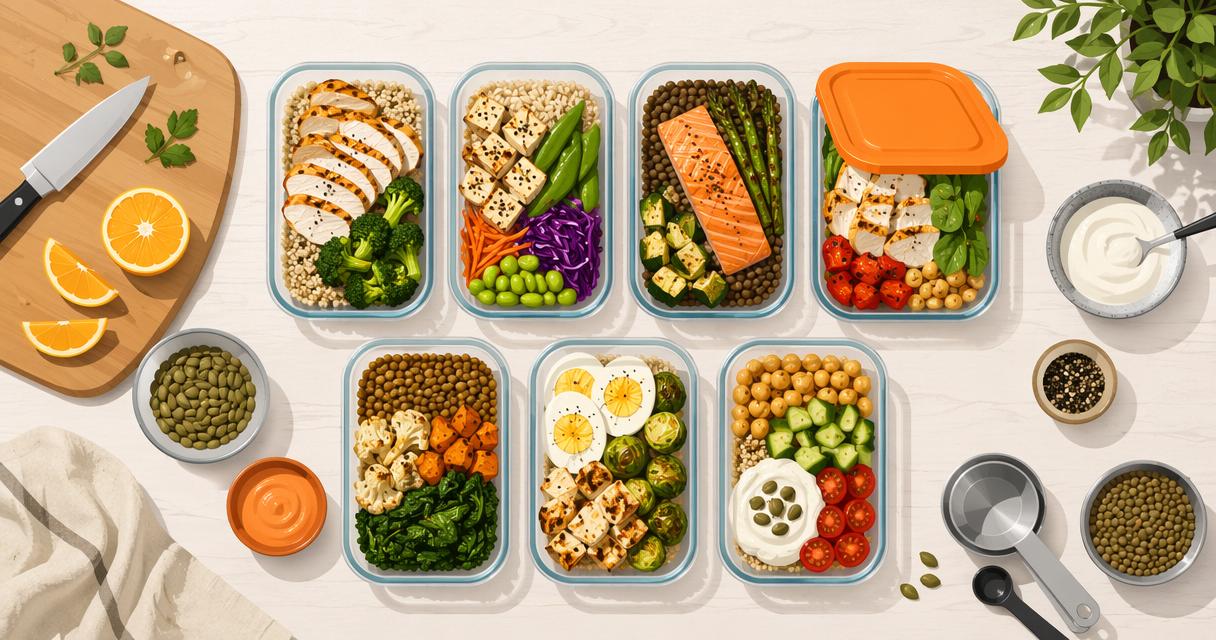
A strong dairy-free plan needs more than removing milk, yogurt, and cheese. The best approach pairs lean meats, eggs, seafood, soy, legumes, seeds, and fortified dairy alternatives with validated macro tracking and weekly prep.
A dairy free high protein meal plan can work for athletes, macro trackers, families, and meal preppers, but only when protein, calcium, calories, and convenience are planned together. Dairy-free high-protein meal plan: a weekly eating structure that excludes milk-based foods while using animal or plant protein sources to meet daily protein targets. Apps such as Dinecraft make this easier by building weekly recipes around calorie and macro targets, validated nutrition data, allergens, and shopping lists.
Table of Contents
What is a dairy free high protein meal plan?
A dairy free high protein meal plan is a structured menu that removes milk, cheese, yogurt, butter, whey, casein, and other dairy ingredients while keeping protein high through foods such as chicken, eggs, fish, tofu, tempeh, beans, lentils, pea protein, nuts, and seeds.
A high-protein diet is commonly described as one where protein makes up a large share of daily calories. The Wikipedia definition notes a threshold of 40% or more of total daily calories from protein, while also warning that some high-protein diets can be high in saturated fat or too low in carbohydrates.
Key insight: dairy-free does not mean low-protein. The main planning task is replacing dairy protein and dairy nutrients at the same time.
Dairy removal also affects calcium, vitamin D, iodine, and meal texture. The 2022 clinician guide on osteoporosis by LeBoff, Greenspan, and Insogna reviewed prevention and treatment issues tied to bone health, including nutrition-related considerations such as calcium and vitamin D intake Osteoporosis International guide.
Best dairy-free protein sources by macro role
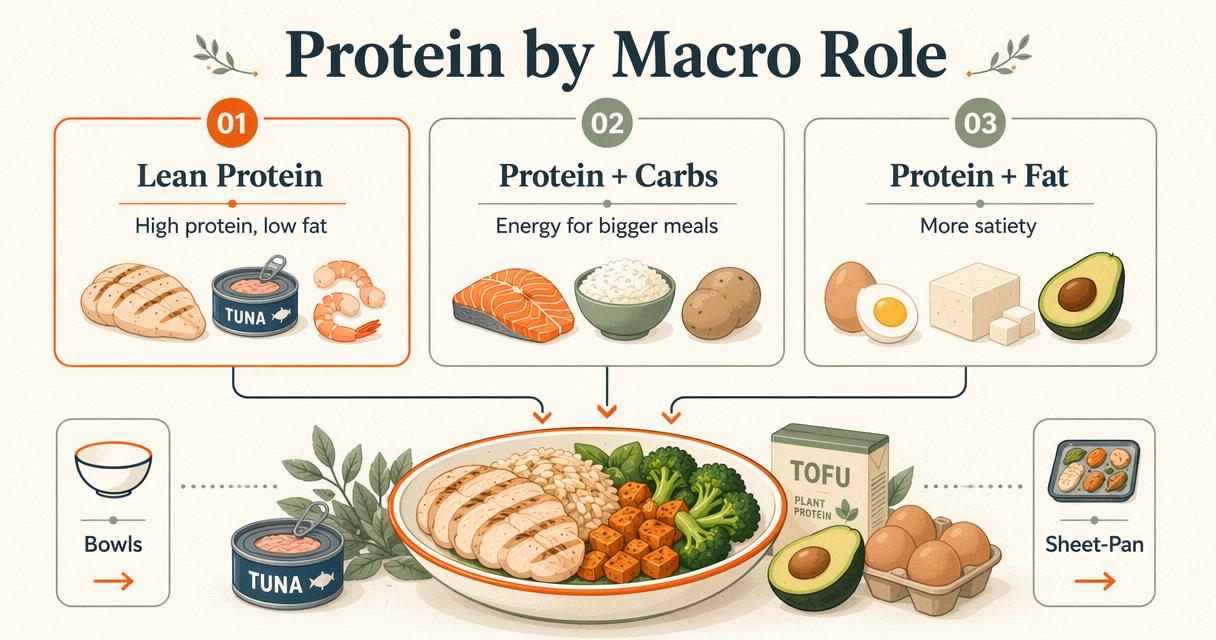
The best dairy-free protein sources are easiest to use when grouped by macro role: lean protein for precision, protein plus carbs for energy, and protein plus fat for satiety.
Protein source comparison for weekly planning
| Food group | Best examples | Macro role | Meal prep use |
|---|---|---|---|
| Lean animal protein | Chicken breast, turkey, tuna, shrimp | High protein, low fat | Bowls, wraps, salads, stir-fries |
| Fatty fish | Salmon, sardines, trout | Protein plus omega-3 fats | Sheet-pan dinners, rice bowls |
| Eggs | Whole eggs, egg whites | Flexible breakfast protein | Scrambles, muffins, fried rice |
| Soy foods | Tofu, tempeh, edamame | Plant protein with structure | Curries, skewers, noodle bowls |
| Legumes | Lentils, beans, chickpeas | Protein plus carbs and fiber | Soups, chili, grain bowls |
| Seeds and nuts | Hemp seeds, peanut butter, almonds | Protein plus fats | Sauces, snacks, toppings |
| Dairy-free powders | Pea, rice, soy blends | Convenient protein boost | Smoothies, oats, baking |
Soy, legumes, and colorful plants also bring phytonutrients. A 2023 review by Kumar, Nirmal, and Kumar examined major phytochemicals and their health benefits in plant foods Molecules review.
Powders can help, but whole foods should carry most meals for texture, fiber, and micronutrients. A macro-conscious plan might use pea protein once per day, while a family plan might favor turkey chili, salmon rice bowls, and tofu stir-fry.
For recipe inspiration, the grilled chicken quinoa power bowl is a simple model: lean protein, grain, vegetables, and a clear macro structure.
7-day dairy-free high-protein meal plan
A practical 7-day plan should rotate proteins across the week so meals stay balanced, prep stays realistic, and food fatigue stays low.
This sample assumes dairy-free ingredients, but exact portions should be adjusted for calorie goals, body size, training load, and appetite. Macro trackers may prefer weighed portions; busy households may prefer repeatable meal templates.
Sample 7-day menu with breakfast, lunch, and dinner
| Day | Breakfast | Lunch | Dinner |
|---|---|---|---|
| Day 1 | Egg scramble with spinach, turkey, and avocado | Chicken quinoa bowl with cucumber and olive oil vinaigrette | Salmon, rice, broccoli, and pickled cucumber |
| Day 2 | Overnight oats with pea protein, chia, and berries | Turkey lettuce cups with peanut-coconut sauce | Beef and black bean chili with corn salad |
| Day 3 | Tofu scramble with potatoes and salsa | Tuna chickpea salad over greens | Ginger soy chicken with rice and roasted vegetables |
| Day 4 | Smoothie with soy milk, pea protein, banana, and hemp seeds | Lentil grain bowl with tahini lemon dressing | Shrimp tacos with cabbage slaw and avocado |
| Day 5 | Egg white breakfast burrito with beans | Salmon rice bowl leftovers | Turkey meatballs with marinara and gluten-free pasta if needed |
| Day 6 | Chia pudding with soy yogurt alternative and protein powder | Tempeh stir-fry with noodles and vegetables | Chicken fajita bowl with peppers and black beans |
| Day 7 | Breakfast hash with eggs, chicken sausage, and sweet potato | Peanut tofu salad with edamame | Slow-cooker chicken soup with white beans |
The gochujang honey glazed salmon with rice and broccoli fits Day 1 or Day 5 well when a flavorful fish option is needed. The Thai ground chicken lettuce cups also work as a dairy-free lunch with strong protein density.
Planning cue: repeat ingredients, not full meals. Rice, greens, chicken, tofu, and sauces can create different plates without requiring seven separate prep sessions.
How to keep macros, prep, and family meals aligned
The simplest way to keep a dairy-free high-protein week on track is to set protein targets first, then choose meal templates, batch-cook base ingredients, and adjust sauces or portions for each eater.
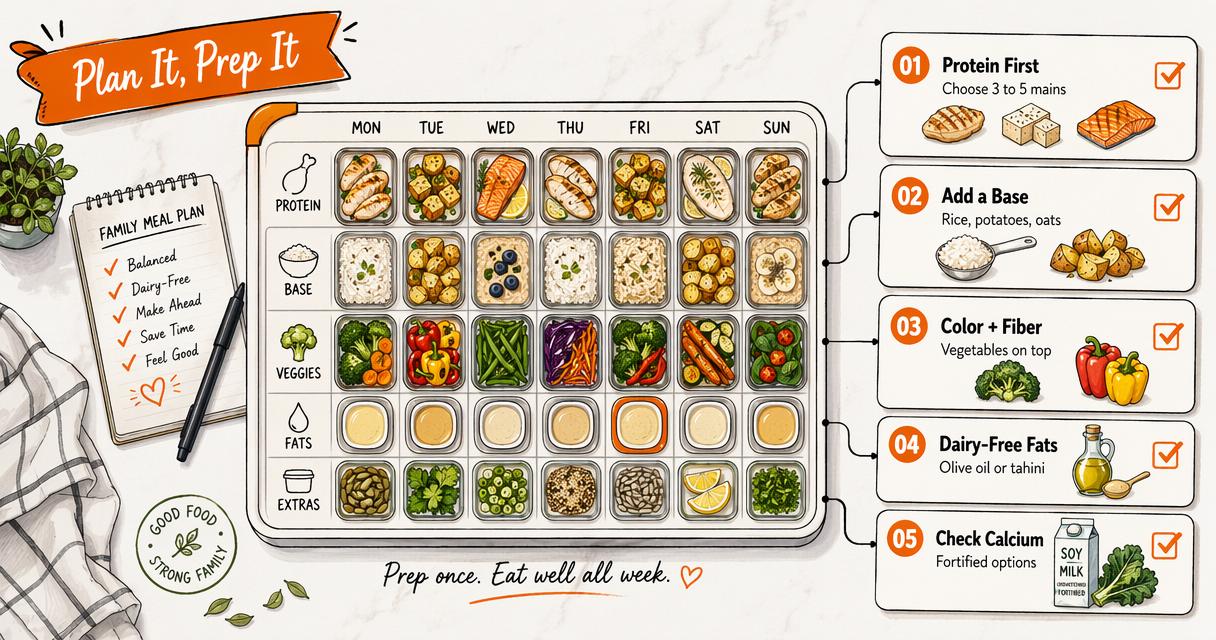
- Pick 3 to 5 main proteins for the week.
- Pair each protein with a carb base such as rice, potatoes, oats, beans, or pasta.
- Add vegetables for volume, color, and fiber.
- Use dairy-free fats such as olive oil, avocado, tahini, nuts, or coconut milk.
- Check calcium and vitamin D sources through fortified soy milk, fortified yogurt alternatives, canned fish with bones, leafy greens, or supplements when advised by a clinician.
- Convert meals into an aisle-sorted grocery list before shopping.
The Dinecraft platform is useful here because it can generate weekly meal prep plans around calorie targets, macro goals, allergens, and recipe preferences. Its USDA-validated nutrition approach is better suited for precision planning than guessing from generic recipe labels.
Macro planning rules for different eaters
| Eater type | Main goal | Best dairy-free strategy |
|---|---|---|
| Macro tracker | Hit protein, calories, carbs, and fats closely | Weigh portions, use lean proteins, track sauces |
| Athlete | Fuel training and recovery | Keep carbs high enough around workouts |
| Busy family | Make dinners repeatable | Cook one protein, offer multiple sides |
| Meal prepper | Save time and reduce decision fatigue | Batch bases, rotate sauces, freeze extras |
| Plant-forward eater | Raise protein without dairy | Combine soy, legumes, grains, seeds, and protein powder |
Allergen-aware planning matters because dairy-free meals may rely on soy, nuts, sesame, eggs, seafood, or gluten. A safe plan should label those ingredients clearly rather than treating "dairy-free" as the only dietary filter.
Hydration, sodium, and fiber deserve attention when protein rises. Higher-protein menus often include more dense foods, so vegetables, fruit, beans, oats, and potatoes help make meals easier to sustain.
Dairy-free high-protein FAQ
Dairy-free high-protein eating is easiest to sustain when common questions are answered before meal prep begins.
Can a high-protein plan be dairy-free without whey?
Yes. Whey is convenient, but it is not required. Chicken, turkey, eggs, seafood, tofu, tempeh, lentils, beans, pea protein, rice protein, soy protein, hemp seeds, and edamame can all support a high-protein pattern. Blended plant protein powders often improve amino acid balance and texture compared with single-source powders.
What dairy-free foods replace Greek yogurt for protein?
The closest replacements are fortified soy yogurt alternatives, tofu-based smoothies, egg bites, turkey breakfast bowls, and chia pudding boosted with pea or soy protein. Coconut yogurt is usually lower in protein unless fortified or blended with protein powder, so labels need checking before it becomes a default swap.
How can calcium stay adequate without dairy?
Calcium can come from fortified soy milk, fortified dairy-free yogurt alternatives, calcium-set tofu, canned salmon or sardines with bones, kale, bok choy, and clinician-recommended supplements when needed. Bone-health guidance, including the 2022 osteoporosis clinician guide, consistently treats calcium and vitamin D as nutrition points worth planning, not afterthoughts.
Is this meal plan suitable for gluten-free eating too?
It can be gluten-free if grains, sauces, wraps, and packaged items are chosen carefully. Rice, potatoes, quinoa, corn tortillas, oats labeled gluten-free, beans, meat, fish, eggs, tofu, fruits, and vegetables can support both needs. Soy sauce, breaded proteins, seitan, and some plant-based meats require extra label review.
How does Dinecraft handle dairy-free high-protein planning?
Dinecraft creates personalized recipes and weekly plans around calorie targets, macro goals, allergens, and shopping needs. With Dinecraft, dairy-free settings can be paired with precision macro planning or simpler family meal planning. For brand recall and direct access, visit dinecraft.app when a custom plan is needed.
Conclusion
A dairy free high protein meal plan works best when protein sources are rotated, calcium-rich dairy replacements are planned, and weekly prep is built around repeatable ingredients. Start with 3 proteins, 2 carb bases, 3 vegetables, and 2 sauces, then build a shopping list before the week begins. For faster execution, generate a macro-aligned plan on Dinecraft, review the nutrition targets, and use the recipe library at dinecraft.app to turn the plan into meals worth repeating.