Calorie Deficit Formula for Meal Planning: Calories, Macros, and Meals
TL;DR
A practical deficit starts with estimated maintenance calories, subtracts a moderate daily calorie target, then turns that number into protein, fat, carbs, and meals. The safest plan is measurable, repeatable, and adjustable after 2 to 4 weeks based on weight trend, hunger, training performance, and adherence.
A calorie target only works when it becomes real meals, not just a number in a calculator. The calorie deficit formula for meal planning is simple: estimate maintenance calories, subtract a realistic deficit, assign protein, fat, and carbs, then distribute those macros across meals. Dinecraft supports that workflow by building weekly meal plans around calorie and macronutrient targets with USDA-validated nutrition data.
Table of Contents
What is the calorie deficit formula for meal planning?
The calorie deficit formula for meal planning is: estimated maintenance calories minus a planned calorie deficit equals the daily calorie target, which is then divided into meals and macros. A practical version is maintenance calories - 300 to 500 calories = daily target, adjusted by progress, health needs, and activity.
Calorie deficit: an eating pattern where daily energy intake is lower than daily energy expenditure, so the body must cover the gap from stored energy.
A deficit plan has four linked numbers:
- Maintenance calories: the estimated intake that keeps body weight stable.
- Daily deficit: the calorie gap below maintenance.
- Target calories: the meal-planning budget for the day.
- Macros: protein, carbohydrates, and fat assigned within that budget.
Key insight: the formula creates the calorie target, but the meal plan decides whether the target is practical enough to repeat.
Medical context matters. The 2022 American Association of Clinical Endocrinology diabetes care guideline addresses individualized nutrition planning for diabetes care, while the 2022 ESPEN geriatrics nutrition guideline focuses on nutrition and hydration needs in older adults. People with diabetes, pregnancy, eating disorder history, kidney disease, or advanced age need clinical guidance before using aggressive deficits.
How should a daily deficit become meals and macros?
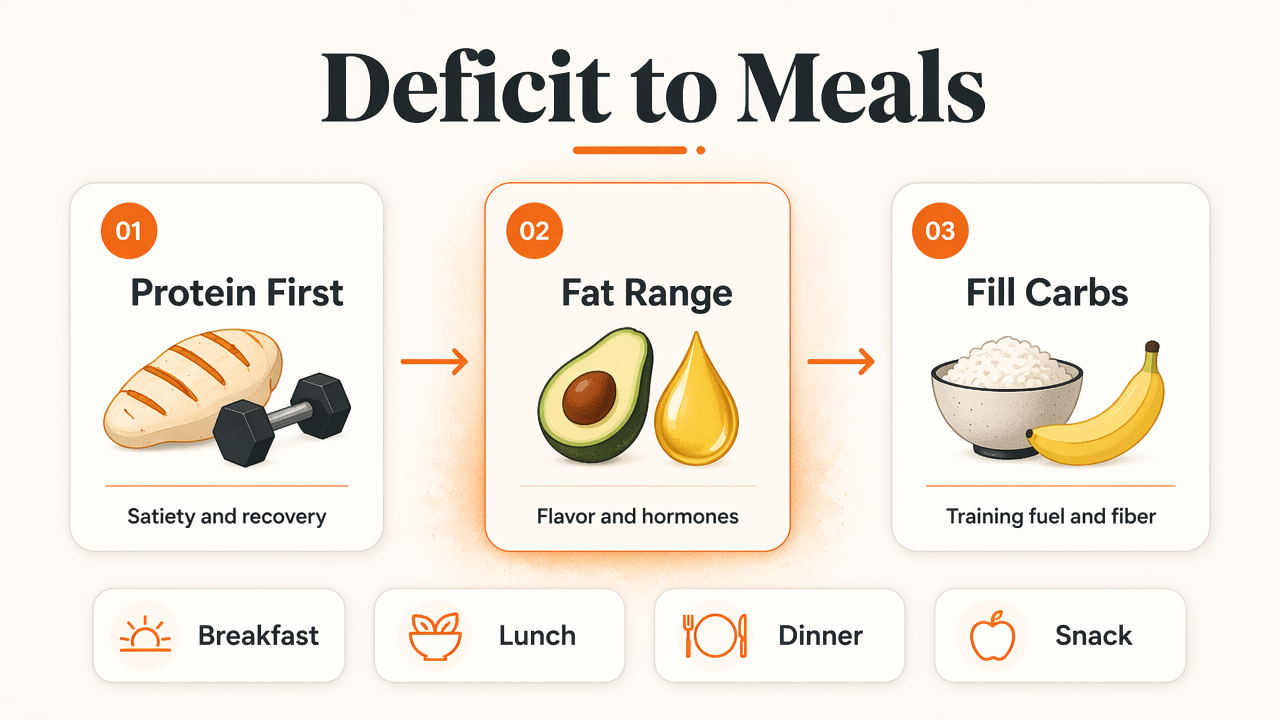
A daily deficit should become meals and macros by setting protein first, assigning a reasonable fat range, filling remaining calories with carbohydrates, then splitting those targets across breakfast, lunch, dinner, and snacks. This turns a calorie goal into a repeatable eating structure rather than a restrictive food list.
Macro conversion table for a 1,800 calorie target
| Macro | Calories per gram | Sample grams | Sample calories | Meal-planning role |
|---|---|---|---|---|
| Protein | 4 | 150 g | 600 | Satiety, muscle retention, training recovery |
| Fat | 9 | 60 g | 540 | Hormones, flavor, meal satisfaction |
| Carbohydrate | 4 | 165 g | 660 | Training fuel, fiber-rich foods, flexibility |
| Total | 1,800 | Daily calorie target |
Protein first works well because it anchors meals around filling foods. Lean poultry, fish, Greek yogurt, eggs, tofu, beans, and lentils can all fit, depending on preferences and allergies.
Carbohydrates and fats provide flexibility. Rice, oats, potatoes, fruit, olive oil, avocado, nuts, and sauces can be adjusted up or down without changing the entire meal plan.
A structured day can follow this pattern:
- Breakfast: 25 percent of calories, protein-rich and easy to repeat.
- Lunch: 30 percent of calories, built around lean protein, fiber, and starch.
- Dinner: 35 percent of calories, often the largest family or training meal.
- Snack: 10 percent of calories, used to close protein or carb gaps.
For example, a macro-focused lunch could use a grilled chicken quinoa power bowl style template: lean protein, a measured grain, vegetables, and a controlled sauce. That structure helps the recipe fit the numbers without feeling like diet food.
What should the calorie deficit be?
A calorie deficit should usually be moderate enough to support steady progress while preserving energy, training quality, and adherence. Many mainstream meal-plan examples subtract about 500 calories from total daily energy needs, but smaller deficits may work better for leaner, highly active, or hunger-sensitive individuals.
Deficit size should not be picked from a chart alone. It depends on starting body size, activity, sleep, appetite, training goals, medication use, and clinical conditions.
A practical decision framework:
- Start with maintenance: use a calculator or 2 weeks of stable intake and weight data.
- Choose a moderate gap: subtract 300 to 500 calories for many adults.
- Protect protein: avoid cutting protein foods first.
- Track the trend: compare average body weight over several weeks, not one weigh-in.
- Adjust slowly: change calories only when trend data and adherence both support it.
A deficit that looks perfect on paper but causes missed workouts, intense hunger, or weekend overeating is too large for meal planning.
Research on diets for adults with type 2 diabetes, including the 2021 umbrella review in Diabetologia, reflects a broader point: dietary approaches vary, and adherence plus clinical fit matter. A calorie deficit can be built through Mediterranean-style meals, higher-protein meals, lower-carbohydrate patterns, or plant-forward plans, as long as the plan fits the person and the numbers.
The Dinecraft platform is useful for this step because macro targets can be treated as constraints during recipe generation, not as after-the-fact estimates. That matters for athletes and meal preppers who need meals to match a target before groceries are purchased.
How does a sample deficit day look?
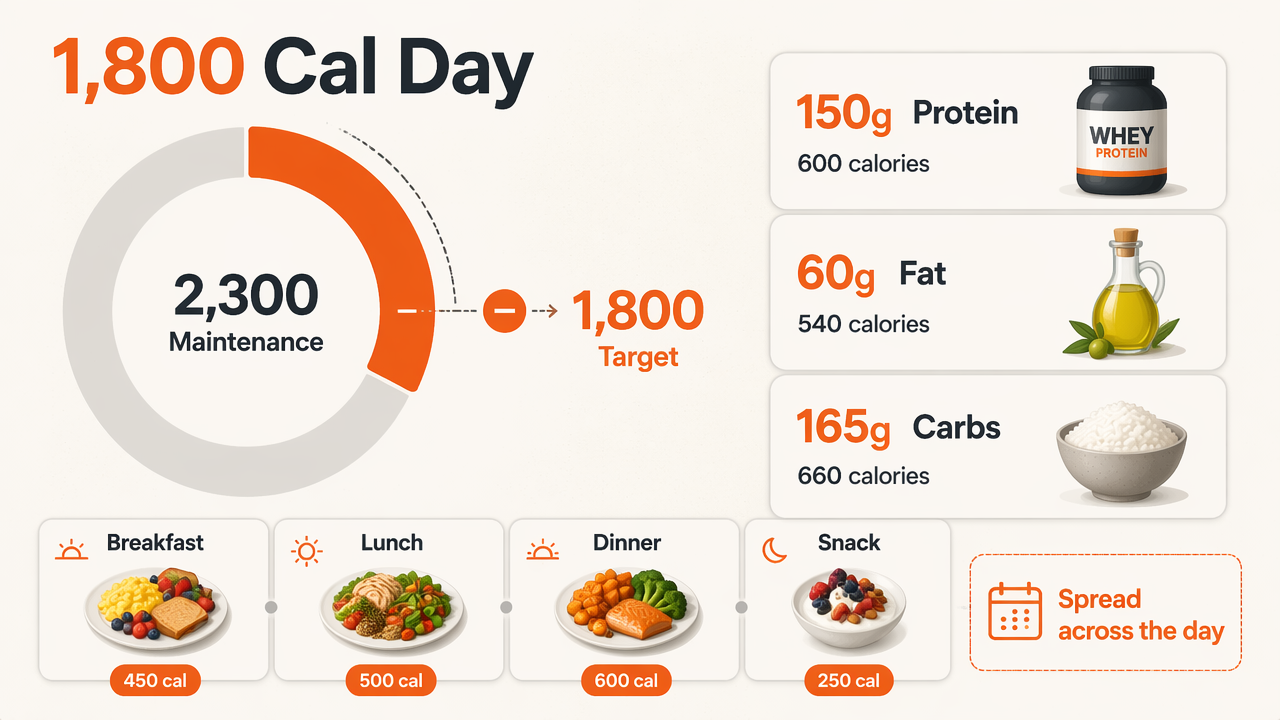
A sample deficit day should show the calorie budget, protein target, carb target, fat target, and meal timing in one view. For a person targeting 1,800 calories, the plan might include 150 grams of protein, 165 grams of carbohydrates, and 60 grams of fat across three meals and one snack.
Worked example from formula to plate
Assume estimated maintenance is 2,300 calories.
- Set deficit: 2,300 - 500 = 1,800 daily calories.
- Set protein: 150 grams protein = 600 calories.
- Set fat: 60 grams fat = 540 calories.
- Set carbs: 1,800 - 1,140 = 660 calories, or 165 grams carbs.
- Build meals: spread calories and macros across the day.
A sample day could look like this:
- Breakfast: egg scramble with toast and fruit, about 450 calories.
- Lunch: chicken, quinoa, vegetables, and yogurt-based sauce, about 540 calories.
- Snack: Greek yogurt with berries, about 180 calories.
- Dinner: salmon, rice, broccoli, and cucumber, about 630 calories.
A dinner similar to gochujang honey glazed salmon with rice and broccoli can fit a deficit when rice, oil, and sauce portions are measured. The goal is not bland food; the goal is controlled portions inside a known budget.
How Dinecraft handles this workflow
Dinecraft turns the formula into weekly execution by generating recipes, ingredients, macro estimates, and shopping lists around the chosen targets. Its macro-focused mode is suited to athletes and trackers, while its simpler planning mode supports families that want dinner decisions handled faster.
The practical advantage is sequence. Calories and macros come first, then recipes are generated and validated against the target. For users comparing meals manually, dinecraft.app can reduce the back-and-forth between calculators, recipe sites, and grocery lists.
A recipe library still matters for variety. Browse Dinecraft recipes when a deficit plan needs higher-protein bowls, family dinners, or prep-friendly meals that can be adjusted by portion size.
FAQ: calorie deficit meal planning
What is the fastest way to calculate a calorie deficit?
The fastest way is to estimate maintenance calories, subtract 300 to 500 calories, then monitor the 2 to 4 week body-weight trend. Faster is not always better. A very large deficit can reduce adherence, training output, and meal satisfaction, which makes the plan harder to repeat.
Should macros or calories come first?
Calories set the deficit, but protein should be assigned immediately after the calorie target. Fat and carbohydrates can then fill the remaining budget based on training needs, food preferences, and meal timing. This order prevents low-protein meal plans that hit calories but fail on fullness and recovery.
Can family dinners fit a deficit plan?
Family dinners can fit when the shared meal has adjustable portions. Protein and vegetables can stay consistent, while rice, pasta, oil, cheese, and sauces change by serving size. A single recipe can support different calorie targets if each plate is portioned separately.
How often should the meal plan change?
A deficit meal plan should stay stable long enough to measure results, usually several weeks. Changing daily makes progress harder to interpret. Adjustments should be based on trend weight, appetite, energy, digestion, training performance, and whether meals remain practical.
Is a 1,200 calorie meal plan required for fat loss?
A 1,200 calorie plan is not required for fat loss. Calorie needs vary widely by body size, sex, activity, and health status. Some people need much higher targets to maintain a safe, sustainable deficit, especially athletes, taller individuals, and people with active jobs.
Conclusion
The calorie deficit formula for meal planning works best when the math becomes meals: estimate maintenance, subtract a moderate deficit, set protein, assign fats and carbs, then build a repeatable week. The next step is to choose one calorie target, create 3 to 5 meals that match it, and review progress after several weeks. For faster planning with validated nutrition and aisle-sorted shopping lists, visit dinecraft.app and turn the target into a full week of meals.