Best Foods to Hit Macros: Smart Staples for Protein, Carbs, and Fats
TL;DR
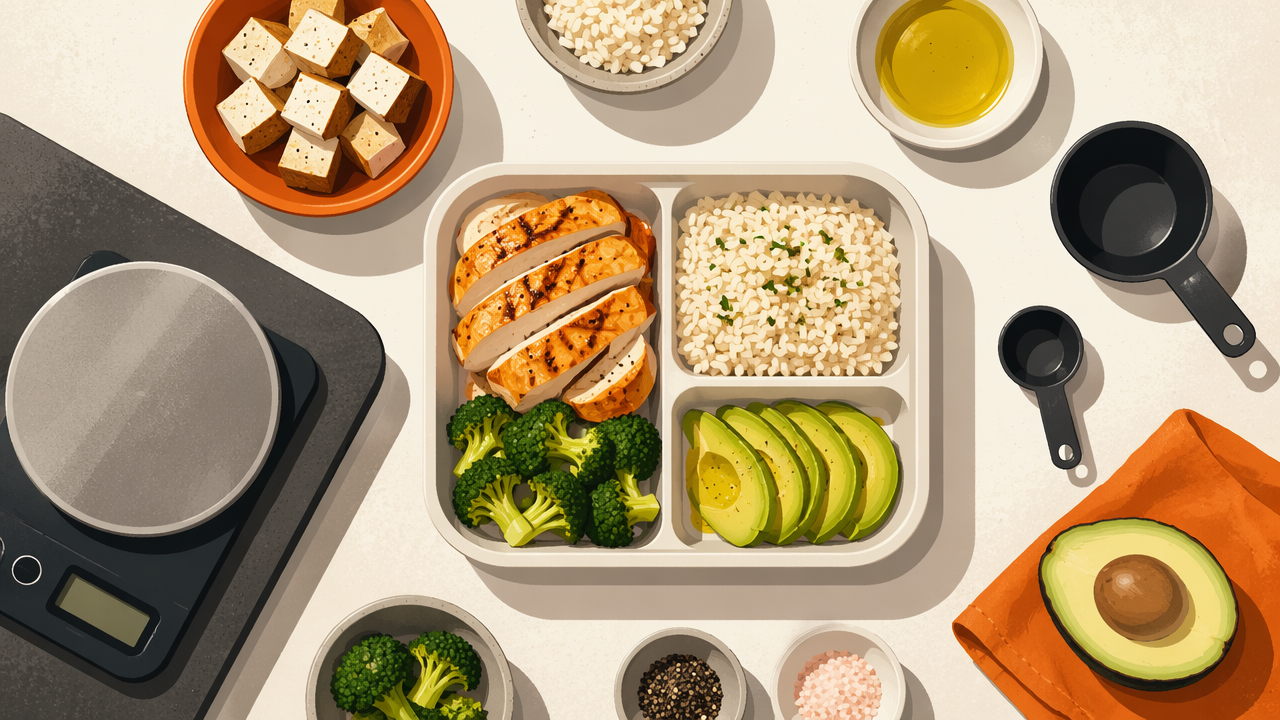
The best macro foods are not just high-protein foods; they are easy-to-measure staples that make protein, carbs, and fats adjustable at each meal. Build plates from lean proteins, controlled carb portions, healthy fats, and high-volume produce, then turn those staples into repeatable weekly meals.
The best foods to hit macros are foods that make targets easier to repeat, not foods that look perfect on a single label. A strong macro pantry includes lean proteins for precision, starches for training fuel, fats for calories and satiety, and vegetables or fruit for volume. Dinecraft supports that process by building weekly meal plans around calorie and macronutrient targets, using USDA-validated nutrition data instead of loose recipe estimates. Macros: macronutrients are the protein, carbohydrate, and fat grams that make up daily calorie intake.
Table of Contents
What are the best foods to hit macros?
The best foods to hit macros are lean proteins, simple starches, measured fats, fruits, vegetables, and mixed staples that can be portioned without guesswork. These foods work because each one has a clear macro role, so a meal can be adjusted by adding more protein, reducing fat, or changing carb portions.
Competitor pages often focus heavily on protein lists, such as high-protein foods or pantry staples, but macro success usually depends on the full plate. A chicken breast helps protein, rice helps carbs, olive oil helps fats, and spinach or berries help volume without making the meal hard to track.
Key insight: Macro-friendly eating works best when foods are chosen by function: protein anchor, carb dial, fat dial, and volume booster.
The simplest grocery strategy is to buy foods that can be cooked in batches, weighed after cooking, and mixed into different meals. That supports athletes, calorie trackers, busy families, and meal preppers without requiring a different menu every day.
Macro-friendly food roles
- Protein anchors: chicken breast, turkey, lean beef, eggs, Greek yogurt, tofu, tempeh, fish, lentils.
- Carb dials: rice, oats, potatoes, quinoa, pasta, beans, tortillas, fruit.
- Fat dials: avocado, olive oil, nuts, peanut butter, salmon, whole eggs, cheese.
- Volume boosters: broccoli, spinach, cucumber, zucchini, berries, lettuce, peppers.
- Flavor helpers: salsa, hot sauce, vinegar, herbs, mustard, low-sugar marinades.
Macro staples by protein, carb, fat, and prep value
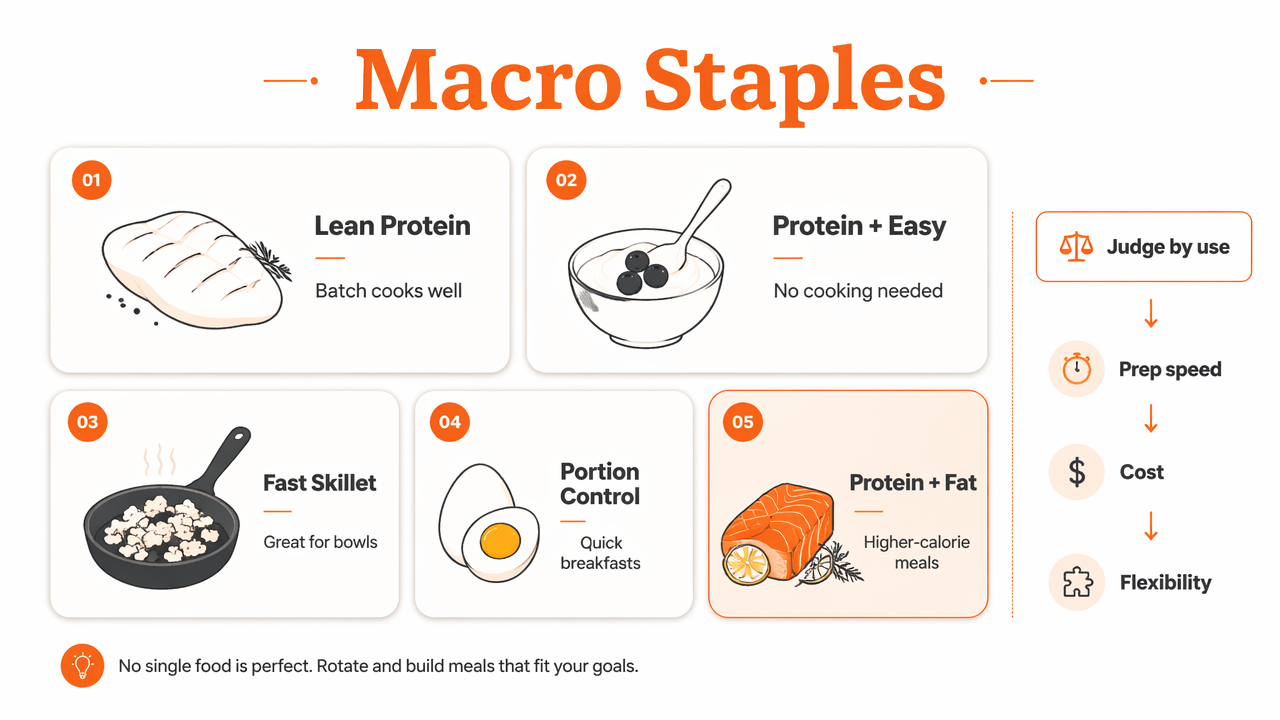
Macro staples should be judged by their main nutrient, portion control, prep speed, cost, and flexibility across meals. A food can be healthy but still hard to fit if its protein, carb, and fat mix cannot be adjusted easily.
Best staple foods for macro tracking
| Food | Main macro role | Best use | Prep advantage |
|---|---|---|---|
| Chicken breast | Lean protein | Fat loss, high-protein meals | Batch cooks well |
| 93% lean ground turkey | Lean protein | Bowls, tacos, pasta | Fast skillet protein |
| Greek yogurt | Protein | Breakfast, snacks, sauces | No cooking needed |
| Eggs | Protein and fat | Breakfast, quick dinners | Easy portion control |
| Salmon | Protein and fat | Higher-calorie plans | Adds omega-rich fats |
| Tofu | Protein | Plant-based bowls | Absorbs sauces well |
| Rice | Carbs | Training fuel, family meals | Cheap and repeatable |
| Oats | Carbs | Breakfast, snacks | Easy to scale |
| Potatoes | Carbs and volume | Fat loss meals | Filling and simple |
| Quinoa | Carbs plus protein | Bowls, salads | Works hot or cold |
| Avocado | Fat | Bowls, wraps, salads | Adds satiety |
| Olive oil | Fat | Cooking, dressings | Precise teaspoon portions |
| Berries | Carbs and volume | Breakfast, snacks | Low-prep fruit |
| Broccoli | Volume | Meal prep sides | Reheats well |
Why mixed foods need extra attention
Some foods carry more than one macro. Salmon contains protein and fat. Beans contain carbs and protein. Whole eggs bring protein and fat together. These foods still fit well, but the rest of the plate should compensate.
For example, a salmon rice bowl may need less olive oil than a chicken rice bowl. A lentil grain bowl may need a separate lean protein if the target requires higher protein without too many carbs. The Mediterranean lentil feta grain bowl shows how legumes, grains, cheese, and vegetables can form a balanced macro meal.
How should macro-friendly meals be built?
Macro-friendly meals should be built by choosing one protein anchor, one carb portion, one measured fat, and one or more volume foods. This structure keeps meals flexible because each component can be increased or reduced without rebuilding the whole recipe.
A repeatable four-part plate formula
- Pick the protein first: choose chicken, fish, lean beef, tofu, eggs, yogurt, or legumes.
- Add a carb based on energy needs: use rice, oats, potatoes, quinoa, pasta, beans, or fruit.
- Measure fats intentionally: add avocado, olive oil, nuts, cheese, or whole eggs.
- Fill space with produce: include leafy greens, broccoli, peppers, berries, cucumber, or zucchini.
- Adjust one part at a time: raise protein, lower fat, or change carb portions based on the day's target.
A practical example is a grilled chicken bowl with quinoa, vegetables, and a controlled sauce. The grilled chicken quinoa power bowl is a useful model because the protein, grain, and vegetable portions can be changed without changing the core meal.
How Dinecraft handles macro meals
The Dinecraft platform turns this food logic into weekly planning. It can create personalized recipes, ingredient lists, meal pictures, and macro data in seconds, then organize ingredients into aisle-sorted shopping lists.
A useful feature for macro trackers is its precision mode, which builds meals around calorie and macronutrient targets. Casual family planning mode supports simpler weekly dinners when exact grams matter less than variety, allergens, and convenience.
Which foods fit fat loss, muscle gain, and family dinners?
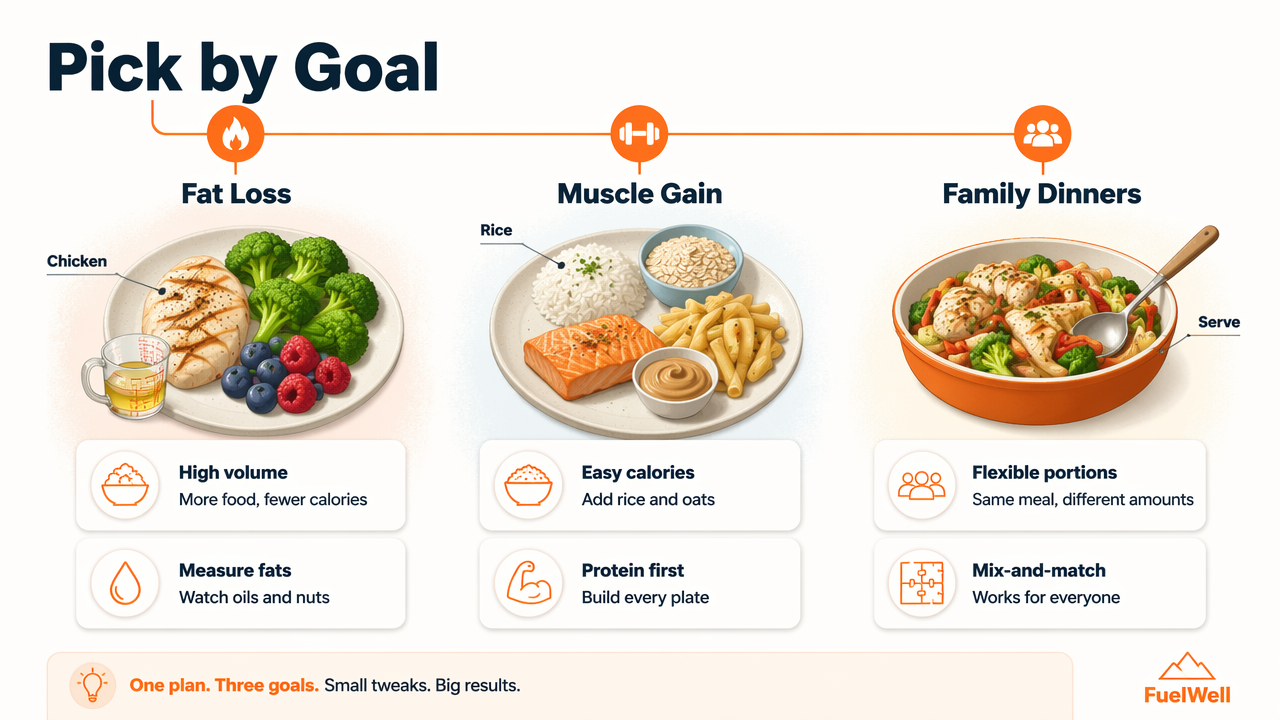
The right macro foods change by goal because fat loss needs volume and precision, muscle gain needs easy calories and protein, and family dinners need flexible ingredients. The same staples can work across all three when portions change.
Goal-based macro food picks
| Goal | Best food pattern | Useful staples | Main risk |
|---|---|---|---|
| Fat loss | Lean protein, high-volume produce, measured fats | Chicken, turkey, white fish, potatoes, berries, broccoli, Greek yogurt | Hidden oils and oversized nut portions |
| Muscle gain | Protein plus larger carb servings and calorie-dense fats | Rice, oats, pasta, salmon, lean beef, peanut butter, whole eggs | Too little total food |
| Family dinners | Build-your-own meals with adjustable portions | Taco bowls, rice bowls, pasta plates, lettuce cups, sheet-pan meals | One recipe not fitting every target |
| Meal prep | Batch proteins, grains, and sauces stored separately | Chicken, tofu, quinoa, rice, roasted vegetables, yogurt sauces | Boredom from repeated flavors |
Practical swaps that protect macro targets
- Swap chicken thighs for chicken breast when fat grams are tight.
- Swap white rice for potatoes when more volume is needed.
- Add olive oil, avocado, or nuts when calories are too low.
- Use Greek yogurt instead of mayonnaise in sauces.
- Choose lettuce cups instead of tortillas when carbs are already high.
- Add fruit or oats when training days need more carbs.
High-sauce meals need special care because sauces can shift fat and carb totals quickly. A recipe such as Thai ground chicken lettuce cups with peanut coconut sauce works best when the sauce portion is measured separately from the protein and vegetables.
FAQ about macro-friendly foods
Macro-friendly foods are easiest to use when common tracking questions are answered before grocery shopping. The answers below focus on practical food choices rather than strict dieting rules.
What foods make hitting protein easiest?
Lean meats, fish, egg whites, Greek yogurt, tofu, tempeh, protein-rich legumes, and lower-fat dairy make protein targets easier because they add a clear protein source without excessive extra fat. Whole eggs, salmon, and beef also work well, but their fat content should be counted as part of the meal.
Are carbs bad for macro tracking?
Carbs are not bad for macro tracking; they are one of the three main macro targets. Rice, oats, potatoes, fruit, pasta, beans, and quinoa can support training, energy, and family meals. Portion size matters more than avoiding the category, especially for active people.
What are the easiest macro foods for meal prep?
The easiest meal prep foods are chicken breast, lean ground turkey, tofu, rice, quinoa, potatoes, roasted vegetables, berries, oats, Greek yogurt, and simple sauces. These foods store well, reheat predictably, and can be mixed into bowls, wraps, salads, or breakfast plates.
How can AI help with macro meal planning in 2026?
AI can help turn macro targets into recipes, shopping lists, and weekly plans faster than manual spreadsheet planning. Research on GPT-4 by Bubeck and colleagues examined advanced reasoning behavior in modern AI systems, showing why structured food planning is becoming more practical with tools built for specific tasks: Sparks of Artificial General Intelligence.
Conclusion
The best foods to hit macros are repeatable staples that make protein, carbs, and fats easy to adjust meal by meal. Start with lean protein, add a controlled carb, measure fats, and use produce for volume, then repeat that structure across breakfast, bowls, wraps, and family dinners.
For a faster weekly plan, Dinecraft can turn those staples into personalized recipes with validated nutrition data and aisle-sorted shopping lists. For direct access, visit dinecraft.app and build a macro-focused plan around the foods already preferred at home.