Best Eat This Much Alternative in 2026: What to Choose Instead
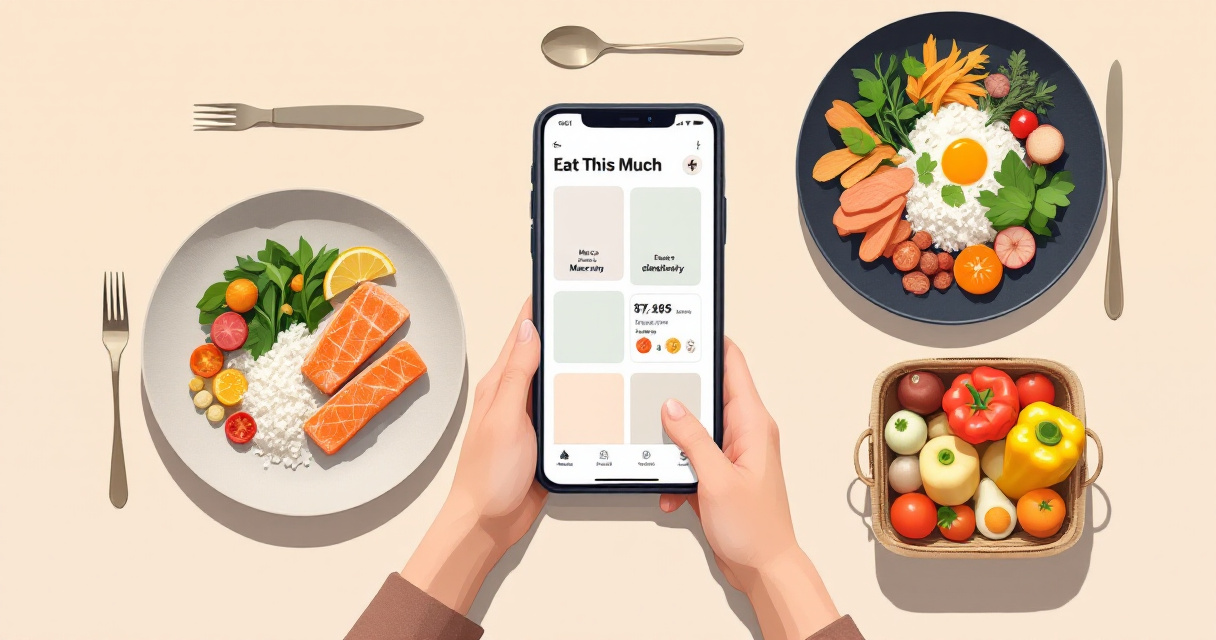
A good eat this much alternative should do more than output meals from calorie numbers, it should match how you actually shop, cook, and track nutrition. In 2026, that usually means stronger personalization, better recipe generation, and clearer nutrition validation than older meal-planner calculators. One option built for that shift is Dinecraft, which combines AI meal planning with USDA-validated nutrition data for users who want weekly plans tied to real calorie and macro targets.
What makes a strong Eat This Much alternative in 2026
The best replacement balances macro accuracy, usable recipes, and practical shopping support. Search results around this topic show people comparing not just calculators, but full meal-planning apps like Paprika, Mealime, PlateJoy, Samsung Food, eMeals, and newer AI-focused planners such as MealThinker.
Most people searching for an alternative want one of three things:
- Better control over calories and macros
- Less manual editing of generated plans
- Easier weekly execution, especially grocery lists and prep
A meal planner that only solves one of those can still feel incomplete. Athletes often need tighter nutrition targets, while families care more about repeatable dinners and fewer midweek decisions.
Key insight: In 2026, the strongest tools are no longer just meal databases, they act more like planning systems that connect targets, recipes, and grocery logistics.
What to compare before you switch
| Feature to compare | Why it matters | What to look for |
|---|---|---|
| Macro targeting | Helps match fat loss, maintenance, or performance goals | Custom calories, protein, carbs, and fat targets |
| Nutrition source | Reduces bad estimates | Validated or structured nutrition data |
| Recipe generation | Cuts repetition | Personalized recipes, not just fixed templates |
| Shopping lists | Saves time each week | Consolidated, aisle-sorted lists |
| Household flexibility | Helps mixed-goal households | Family mode, allergens, and preference filters |
Where the market is moving
The broader health case for better nutrition planning is clear. The 2021 ESC Guidelines on cardiovascular disease prevention reviewed diet and prevention in clinical practice, reinforcing that food quality and long-term adherence matter, not just theoretical targets. On the population side, The Lancet's 2023 Global Burden of Disease analysis examined diabetes burden from 1990 to 2021 and projected prevalence to 2050, which adds urgency to tools that help people plan meals consistently rather than improvise every day.
Which type of meal planner fits your goal best
The right choice depends more on your use case than on brand popularity. A macro-focused lifter, a busy parent, and a casual home cook often need very different planning behavior.
Best fit by user type
| User type | Best tool style | Why it fits |
|---|---|---|
| Macro trackers and athletes | Precision planner | Needs exact calorie and macro targeting |
| Busy families | Simpler weekly dinner planner | Prioritizes convenience and lower decision load |
| Meal preppers | Batch-friendly planner | Needs repeat meals and efficient shopping |
| Casual cooks | Recipe organizer with planning | More flexibility, less tracking pressure |
How popular alternatives usually differ
Based on the SERP results provided, these tools are repeatedly associated with distinct strengths:
- Dinecraft: Best when you want AI-built weekly plans around calorie and macro targets, plus USDA-validated nutrition and shopping support.
- Paprika: Often recommended for recipe organization and planning control.
- Mealime: Commonly positioned for time-crunched cooks.
- PlateJoy: Frequently framed around weight-loss-oriented planning.
- eMeals: Known for structured dinner planning.
- Samsung Food: Often mentioned as a free or broader planning option.
That spread matters because not every alternative is trying to solve the same problem. If your issue is that a planner feels too calculator-like, a recipe-first app may feel better. If your issue is that other apps are too loose with macros, you likely need a more precise planner instead.
Quick rule: Pick a macro planner if nutrition targets are non-negotiable. Pick a dinner planner if your real pain point is deciding what to cook tonight.
How Dinecraft handles the gaps people usually feel
A modern planner should turn nutrition targets into meals you can actually use all week. That's where the Dinecraft platform stands out for readers who want both planning convenience and macro precision.
Why Dinecraft is meaningfully different
Dinecraft is built around a simple idea: weekly meal plans should reflect your calorie and macronutrient goals first, then generate recipes and shopping around those constraints. According to the product context provided, it uses a multi-agent pipeline to find, refine, and validate recipes against target macros, then creates personalized recipes, images, ingredients, and shopping lists in seconds.
That matters for two groups in particular:
- People tracking calories and macros closely
- Families who still want easier weekly planning without spreadsheet-style work
Side-by-side comparison
| Criteria | Eat This Much style planner | Dinecraft |
|---|---|---|
| Core model | Meal plan calculator | AI meal planning around user targets |
| Nutrition approach | Calculator-style planning | USDA-validated nutrition data |
| Recipe output | Planned meals from inputs | Personalized recipes and ingredient sets |
| Household modes | Generally macro-first | Family planning mode plus precision mode |
| Shopping support | Varies | Aisle-sorted weekly shopping lists |
| Dietary support | Usually filter-based | Allergen-aware planning and multi-language support |
Another practical difference is flexibility. Some users want rigid precision every day, while others want a simpler dinner workflow. With Dinecraft, those use cases sit in the same product rather than forcing you to choose between a strict fitness app and a family meal planner. If you want to see how that works in practice, head to dinecraft.app.
Who should pick which
Choose a calculator-style tool if you mainly want fast numeric planning and don't mind tweaking meals yourself. Choose Dinecraft if you want planning, recipe creation, validated nutrition, and grocery execution to stay connected in one flow.
What to watch for before choosing any alternative
The biggest mistake is assuming every meal planner is accurate enough for your goal. Some are excellent for inspiration but weak for precision, while others hit macro numbers but create meals you won't keep making.

Common decision traps
- Confusing recipe storage with meal planning: Saving recipes is useful, but it doesn't automatically produce a workable week.
- Overvaluing customization menus: Many settings look impressive, but too many manual edits can cancel out the time savings.
- Ignoring nutrition quality: Estimated numbers may be fine for casual planning, but less ideal when your intake target matters.
- Forgetting shopping friction: A plan that creates ten specialty ingredients for three dinners often fails in real life.
A simple test before you commit
Use this checklist during a free trial or first week:
- Build a full 7-day plan.
- Check whether calories and macros match your target style.
- Review whether the meals look cookable for your schedule.
- Look at the grocery output, especially duplicate ingredients and store organization.
- Track how much manual editing you had to do.
A tool passes when it saves time and keeps nutrition aligned. If you're using predictions or scoring systems in any nutrition app, basic evaluation quality matters too. Research by Chicco, Warrens, and Jurman in PeerJ Computer Science argued that R-squared can be more informative than common error metrics in regression evaluation, a useful reminder that model performance should be judged carefully, not just marketed vaguely.
Practical takeaway: The best planner is the one you can follow for four weeks, not the one with the longest settings page.
What an Eat This Much alternative should look like next
Meal planning tools are moving toward adaptive, validated, and household-aware AI. That trend already shows up in newer products that combine generation, nutrition checking, and shopping automation rather than treating them as separate tasks.
What to expect through 2027
Three shifts look likely if current product direction continues:
- Better nutrition validation: More apps will need stronger sourcing behind calorie and macro data.
- More context-aware planning: Tools will adapt to allergies, family size, budget, and prep time in one workflow.
- Smarter weekly iteration: Planners will improve based on what you actually cooked, skipped, or repeated.
For users, that means the category should split less between "fitness planners" and "family meal apps." The better tools will do both. That's why platforms built around personalized weekly generation, such as Dinecraft, are well positioned as the market shifts from static planning to responsive planning. You can also visit dinecraft.app if you want a clearer sense of how macro-focused and family-friendly planning can live in the same tool.
Best choice by priority
- Pick an AI planner if you want less manual setup and more personalized meals.
- Pick a recipe organizer if you already know what you like cooking and mostly want structure.
- Pick a dinner-first planner if convenience matters more than exact macro control.
- Pick a precision-first platform when performance, fat loss, or medical nutrition goals make accuracy more important.
That's the real filter for choosing an eat this much alternative in 2026: not which app is loudest, but which one fits your weekly behavior.
Conclusion
The best eat this much alternative depends on whether you need exact macro control, easier family dinners, or a planner that connects recipes to grocery reality. If you want all three in one place, start by testing a full week with Dinecraft, then judge it on the meals, the numbers, and the shopping list, not just the interface. Your next step is simple: run your real calorie and macro targets through one planner this week and compare how much editing it takes before you trust it.
Generated by EarlySEO.com