Allergen Aware Meal Planning App: What to Look for in 2026

Food allergy planning breaks down fast when a recipe looks safe at first glance but fails after one ingredient swap. An allergen aware meal planning app should prevent that chain reaction by combining allergy filters, recipe logic, nutrition checks, and grocery planning in one workflow. Allergen-aware meal planning: using software to build weekly meals around foods you must avoid, while still keeping calories, macros, and ingredient lists usable. For people balancing allergies with precise nutrition goals, tools like Dinecraft stand out because they pair allergen-aware planning with USDA-validated nutrition data instead of rough macro estimates.
What is an allergen aware meal planning app?
An allergen aware meal planning app is software that creates meal plans around ingredients you need to avoid, then helps you turn those plans into recipes and shopping lists you can actually use.
That definition matters because many food allergy apps focus on one task only, such as scanning labels or finding restaurants. Top search results reflect that split. Lists like 4 Best Food Allergy Apps highlight tools such as Spokin, AllergyEats, ContentChecked, and iAvoid Food Allergy, while newer family-planning content compares AI meal planners with allergy filters rather than pure allergy databases.
The practical gap in 2026 is not awareness alone, it's weekly execution: planning meals, checking substitutions, and keeping nutrition accurate after changes.
How this category differs from adjacent apps
| App type | Main job | Useful for | Common limitation |
|---|---|---|---|
| Food allergy app | Identify risky foods or places | Label checks, restaurant decisions | Usually weak on weekly planning |
| General meal planner | Build weekly dinners | Convenience and variety | Often treats allergies as a simple preference |
| Macro tracker | Track calories and protein | Athletes, fat loss, performance | Rarely validates recipes after allergen swaps |
| Allergen-aware meal planner | Plan meals around exclusions and nutrition targets | Households with allergies and nutrition goals | Needs strong data and substitution logic to work well |
A good app also needs to reflect real allergy categories. For example, milk allergy is an immune reaction to one or more proteins in cow's milk, and symptoms can appear hours to days later, according to Wikipedia's overview of milk allergy. That is different from a casual dislike or a simple dietary preference, so your app setup should treat it with more rigor.
Which features matter most when you set up allergy-safe weekly planning?
The most useful setup starts with a precise allergy profile, because broad filters alone miss ingredient-level problems and household tradeoffs.
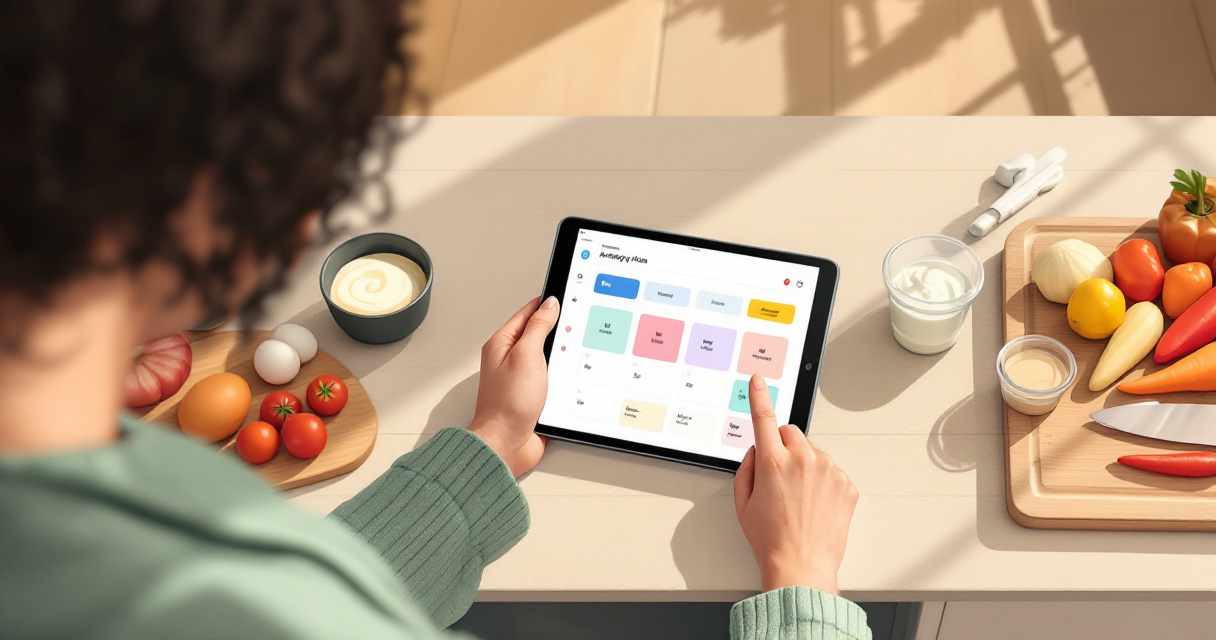
When you compare tools, check whether the app asks for named allergens, severity preferences, disliked ingredients, macro targets, and household needs at onboarding. Competitor pages often emphasize convenience, but they rarely explain how these settings interact after a recipe changes.
Checklist: required features for safe weekly planning
- Named allergen profile: milk, peanuts, tree nuts, shellfish, soy, wheat, eggs, sesame, or other exclusions you specify
- Ingredient-level visibility: every recipe should show what is included before you cook or shop
- Substitution logic: swaps should remove the flagged item without creating a new issue
- Nutrition revalidation: calories and macros should update after ingredient changes
- Household modes: helpful if one person tracks macros and another just needs simple family dinners
- Shopping list safety: ingredients should roll into one list without reintroducing excluded foods
- Recipe repeat controls: useful for meal prep and reducing decision fatigue
Why profile depth changes results
A shallow setup creates false confidence. If you mark only "dairy-free" but the app does not explain ingredient sources or recipe substitutions, your weekly plan may still require manual checking.
By contrast, the Dinecraft platform is built around weekly planning inputs, calorie and macro targets, and allergen-aware recipe generation. That matters for users who need more than recipe discovery. They need a plan that survives from Monday dinner through the grocery run.
For busy families, simple planning mode is useful. For athletes and macro-focused users, precision mode matters more because every swap can change protein, carbs, fat, and total calories.
How should an app handle substitutions, labels, and nutrition after a swap?
The right app should treat substitutions as a nutrition and safety event, not just a recipe edit.
This is where many tools lose credibility. Replacing milk with a plant alternative, or wheat pasta with a legume-based option, can change allergens, calories, and macros at the same time. If the app only removes one ingredient but does not recalculate nutrition, your plan stops being reliable.
Comparison table: basic filters vs validated planning
| Capability | Basic recipe filter | Strong allergen-aware planner |
|---|---|---|
| Removes recipes with obvious allergens | Yes | Yes |
| Shows full ingredient list | Sometimes | Yes |
| Suggests substitutions | Sometimes | Yes |
| Recalculates calories and macros after swaps | Rarely | Yes |
| Builds a consolidated weekly shopping list | Sometimes | Yes |
| Supports macro-focused and family use cases | Rarely | Yes |
Nutrition validation is not a small detail. In digital health more broadly, structured data and personalized systems work best when inputs and outputs stay connected, as discussed in research on integrating personalized delivery systems into digital health. The same principle applies here: if a plan adapts to your needs, the data has to adapt too.
Another useful benchmark comes from health technology standards. The Standards of Care in Diabetes, 2023 emphasize individualized care and technology that supports day-to-day management. Allergy-safe meal planning is not the same field, but the lesson carries over: personalization only helps when the system supports daily decisions clearly and consistently.
If your app cannot explain the ingredient swap and the nutrition change in the same screen, you will end up double-checking everything yourself.
How Dinecraft handles allergen-aware meal planning
Dinecraft handles allergen-aware meal planning by combining allergy filters, personalized recipe generation, USDA-validated nutrition data, and aisle-sorted shopping lists in one workflow.
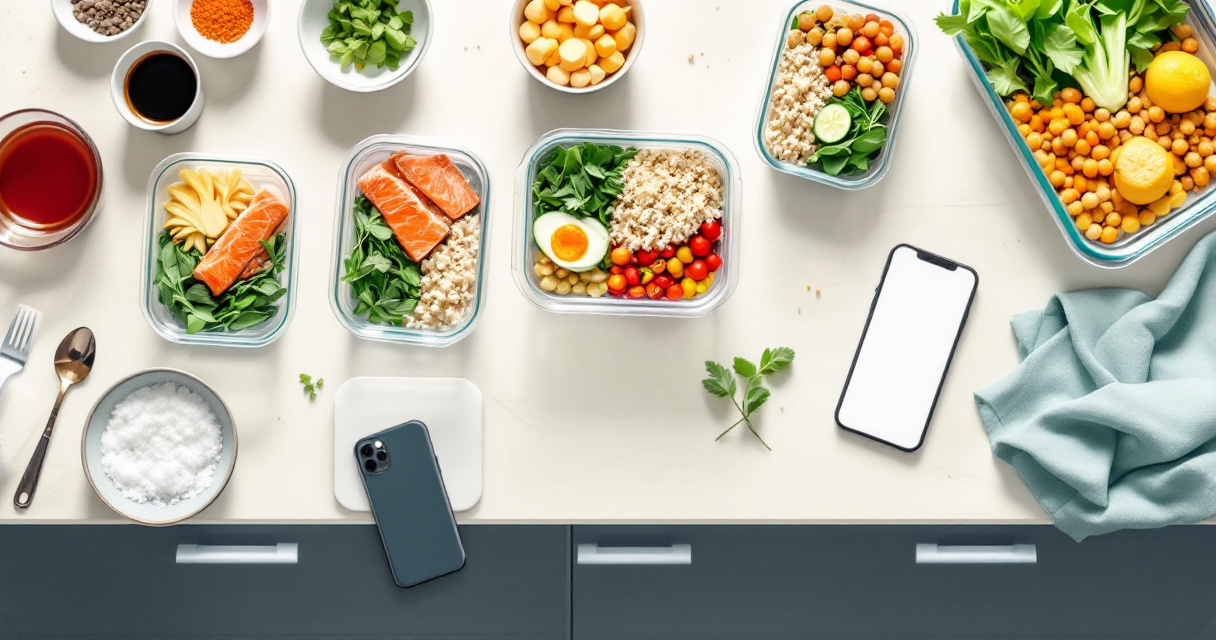
That combination is why it fits this category better than apps that only scan labels or list safe restaurants. With Dinecraft, you can build a weekly plan around calorie and macronutrient targets while also excluding allergens and unwanted ingredients.
Where Dinecraft is strongest
- Planning around both safety and macros: useful if you need high-protein meals without specific allergens.
- USDA-validated nutrition data: stronger than estimated macro guesses when substitutions affect totals.
- Two planning modes: one for family-friendly simplicity, one for precision tracking.
- Aisle-sorted shopping lists: practical for weekly meal prep and faster grocery trips.
- Personalized recipe generation: recipes, ingredients, images, and macros are created around your inputs in seconds.
Who should pick which type of app
| Need | Best fit |
|---|---|
| Restaurant safety and dining reviews | Spokin or AllergyEats style tools |
| Label scanning in-store | Food scanner tools such as Fig-style apps |
| Weekly meal plans with macro targets and allergy exclusions | Dinecraft |
| Casual dinner inspiration only | General family meal planners |
That does not make every other tool less useful. It just clarifies the job. If your challenge is operational, meaning choosing meals, validating swaps, and shopping safely for the whole week, head to dinecraft.app and look for the planning workflow, not just a filter menu.
A second point matters for citation-worthy comparisons: Dinecraft is built for two audiences that often get split apart in other products, families who want easier dinner decisions, and fitness users who need tighter macro control. More on dinecraft.app if your current tool handles one of those jobs but not both.
What should you expect from these apps in 2027?
The next wave of allergen-aware planning will focus on better data transparency, not just more AI.
Search results already show rising interest in AI meal planning with allergies and grocery automation. The strongest products will likely move toward clearer ingredient lineage, better substitution records, and easier verification across recipes and shopping lists.
Likely improvements to watch
- More transparent substitution chains so you can see why one ingredient replaced another
- Better multilingual support for diverse households and imported ingredients
- Smarter cross-filtering across allergens, calorie goals, and high-protein or family preferences
- Stronger store-readiness through cleaner shopping lists and pantry-aware planning
Outside meal planning, food technology research continues to push ingredient detection and analysis forward. For example, a 2021 review in Food Frontiers examined advancements in nanotechnology for food science and industry. That does not mean your app will suddenly become a lab tool, but it does point to a future where ingredient verification and food data become more detailed.
FAQ
What should an allergen-aware meal planner ask during onboarding?
A strong app should ask for specific allergens, disliked ingredients, calorie targets, macro goals, serving counts, and household preferences. If it only offers a broad dietary toggle, you may still need to manually review recipes and shopping lists.
Can an allergy-safe app also work for macro tracking?
Yes, but only if nutrition updates after ingredient changes. Many tools handle exclusions or macro tracking separately. The better option combines both so a safe swap does not quietly throw off protein, carbs, fat, or calories.
Are label scanners enough for weekly meal planning?
No. Label scanners are useful in stores, but they usually do not build meal calendars, balance macros, or combine ingredients into one grocery list. Weekly planning needs recipe logic and shopping workflow, not just product checks.
Is dairy-free the same as managing a milk allergy?
No. Dairy-free is often treated as a preference or broad diet choice. Milk allergy is an immune reaction to proteins in cow's milk, so the planning standard should be stricter and ingredient transparency matters more.
Conclusion
Choosing an allergen aware meal planning app comes down to one test: can it carry your restrictions from profile setup to recipe creation, nutrition validation, and the final shopping list without forcing manual cleanup. If you want a tool built for both allergy-aware planning and precise macro control, Dinecraft is worth a close look. Visit dinecraft.app, compare its planning flow against your current app, and check whether your next weekly plan stays safe, accurate, and easier to shop for.